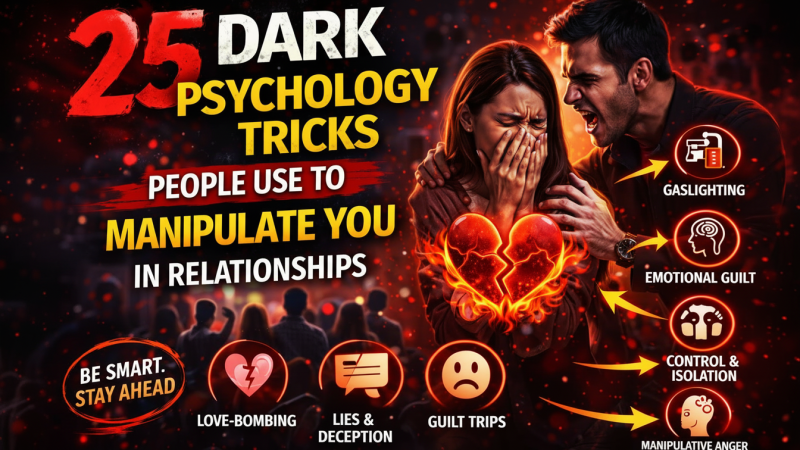
Executive Summary
This comprehensive guide uncovers 25 dark psychology tactics used in relationships – from classic manipulative ploys like gaslighting and love-bombing to subtler schemes like projection and covert triangulation. For each tactic we define what it is, give realistic examples of how it might occur, list key warning signs victims experience, and explain the short- and long-term emotional impacts. We also provide practical, ethical countermeasures (such as clear boundary-setting, seeking support, or asserting facts) to protect yourself. All advice is based on reputable mental health sources and research.
Relationships can be complex. Even kind partners may unknowingly use manipulation to get their needs met. By learning to recognize these tactics, you can respond assertively and maintain your emotional well-being.
Key takeaways: Manipulators often use gaslighting (denying reality) and love-bombing (excessive praise) to control you, then switch to tactics like silent treatment, guilt-tripping, or projecting their faults onto you. These behaviors can cause anxiety, confusion, guilt and even depression. The good news is you can set boundaries, document events, seek outside perspectives, and refuse to play along.
25 Manipulative Tactics (Definitions, Examples, Signs, Impacts, Countermeasures)
Below are the 25 distinct tactics. Each entry includes: Definition of the tactic, a Real-life Example, common Signs/Victim Experiences, the Impact on the victim’s emotions or well-being, and practical Countermeasures to resist or stop the abuse.
1. Gaslighting
Definition: A form of emotional abuse where the partner deliberately makes you doubt your own memory, perception or sanity. The abuser insists that events never happened or were different from your recollection, maintaining power by sowing confusion.
Example: Your partner flatly denies something they said or did. They might insist “I never said that,” or call you “crazy” when you recall facts. They may twist your words (“That’s not what you said, you’re imagining things”).
Signs/Victim Experience: You frequently feel confused or disoriented. You second-guess your memory of events (“Did that really happen?”) and feel anxious about being labeled “overly sensitive”. You may apologize or agree just to end arguments, even when you’re sure you’re right.
Impact: Short-term effects include anxiety, self-doubt, shame, and confusion. Over time victims often lose confidence in their own mind and feel trapped or dependent on the abuser. Long-term, gaslighting can contribute to chronic stress, depression or anxiety disorders, as constant self-doubt erodes self-esteem. Victims report feeling “crazy” or mentally exhausted.
Countermeasures: Keep a written record of events (notes, messages, or a journal) to anchor reality. Calmly insist on checking facts rather than arguing. When the conversation becomes a power struggle, opt out and disengage. Remind yourself that you cannot control the partner’s perception – you can only be truthful and trust your own experience. Share your concerns with trusted friends or a therapist who can validate your reality. Setting firm boundaries (e.g. “I will not continue this discussion if you keep denying what happened”) is crucial.
2. Love-Bombing (Idealization)
Definition: An overwhelming shower of affection, compliments and promises early in a relationship, designed to quickly gain your trust and devotion. Love-bombing often precedes abuse; the abuser alternates between idealizing you (“You’re perfect!”) and abruptly pulling back.
Example: In the first weeks a partner seems perfect: incessantly texting, grand gestures, constant praise and future-planning (“We’re soulmates”). Then suddenly the tone shifts, and they become distant or critical once they feel secure.
Signs/Victim Experience: You’re swept off your feet at first, feeling flattered and special. But after the honeymoon phase, you start feeling on edge – if you’re not constantly matching their pace (time, intimacy, availability), they withdraw love and attention. You may feel anxious about losing their approval.
Impact: Short-term, love-bombing can cause intense emotional highs, leading you to idealize the abuser. When followed by sudden withdrawal, it creates confusion and a craving for their affection. Over time this intermittent affection can form a trauma bond, making you overly dependent and fearful of leaving. Victims often feel uneasy, emotionally exhausted, and eventually distrustful of affection itself.
Countermeasures: Slow down the pace – take relationships step by step. Note inconsistencies: if compliments feel off or too good to be true, be cautious. Maintain outside friendships and interests so your world isn’t only theirs. Demand consistency – for example, if they say “I love you,” pause and ask for time to build trust before escalating intimacy. If they alternate between extremes, call out this pattern calmly (“One moment you call me everything, then you ignore me. That confuses me”). Above all, check in with friends/family about these behaviors to stay grounded.
3. Silent Treatment (Stonewalling)
Definition: Deliberately refusing to communicate, give information, or show affection as a form of punishment or control. It includes the “cold shoulder” or stonewalling, and is a form of emotional abuse.
Example: During or after an argument, your partner goes mute – no talking, refusing to answer texts or calls – until you apologize or guess what they want. They might simply walk away mid-conversation and ignore you, making you feel guilty or panicked.
Signs/Victim Experience: You feel anxious, confused and rejected when they withdraw communication. You may catch them smirking or being deliberately sullen (sighing, glaring). Small things – a chore done “too slowly,” a backhanded compliment – can be used to provoke you. If confronted, they might say “I was tired” or “nothing’s wrong,” further frustrating you.
Impact: The short-term effect is intense emotional stress: victims report feeling abandoned, abandoned, or frantic to appease their partner. Over time, the silent treatment erodes trust and communication in the relationship. Victims often feel powerless and walk on eggshells; as HelpGuide notes, “passive-aggressive” acts like the silent treatment can escalate into full stonewalling, causing long-term anxiety and helplessness.
Countermeasures: Recognize it as a tactic, not your fault. Stay calm and state your feelings (“When you stop talking to me, I feel hurt and confused”). Ask directly when the silence will end, and insist on rescheduling the talk later. It may help to put a time boundary: “I can’t communicate if we both stay silent. Let’s pick a time to talk.” Document how often it happens – if it’s abuse, consider counseling. If they refuse all contact, use the time to practice self-soothing and reach out to friends/family for support. Importantly, never beg for communication, which only reinforces their control.
4. Guilt-Tripping (Emotional Blackmail)
Definition: Manipulating someone by playing on their sense of guilt, obligation, or sympathy. The abuser knows what makes you feel guilty and uses it to get compliance. Phrases like “How can you be so selfish?” or “I guess I’ll suffer because you’re too busy” are common.
Example: After you decline a request, your partner sulks and says “I can’t believe you’d do this to me,” or “I’m just so disappointed/sad.” They might bring up past sacrifices you made (“I did so much for you”) to make you feel you owe them.
Signs/Victim Experience: You feel bad or insufficient after these comments. Your partner may cry or become moody to elicit sympathy, or exaggerate your mistakes (“You’ve hurt me so much!”). You find yourself offering concessions or apologies just to relieve the guilt.
Impact: Victims often feel anxious and responsible for the abuser’s happiness. Short-term, guilt-tripping causes stress and resentment (“I’m walking on eggshells to avoid hurting them”). Long-term, it can lower self-esteem and create chronic worry that you’re a “bad person” if you ever say no. HelpGuide terms this emotional extortion (Forward’s FOG: fear, obligation, guilt), which can lead to frustration, depression and feeling trapped.
Countermeasures: Recognize guilt as a manipulation tactic. Pause before responding; remind yourself that you have a right to your own needs. Communicate assertively with “I” statements: e.g., “I understand you’re hurt, but I have my own needs too.” Set clear boundaries: if they start guilt-tripping, calmly state, “I won’t accept being made to feel guilty for saying no.” Over time, consistently refusing to “rescue” them from these feelings (for example, by not constantly apologizing) will break the habit. Consider couples therapy so that a neutral professional can address this pattern.
5. Playing the Victim
Definition: The manipulator portrays themselves as the injured party to avoid blame, gain sympathy, or guilt you into giving in. This often overlaps with DARVO (“Deny, Attack, Reverse Victim and Offender”) tactics. The abuser literally “plays the victim” of the situation.
Example: When you raise a concern, they cut you off with “Why are you always blaming me? Do you know what I’m going through? You’ve hurt me so much.” They turn any criticism around: “I’m the one suffering here!” or accuse you of being the selfish one.
Signs/Victim Experience: You feel guilty or startled when they portray themselves as hurt. They may tear up or dramatically recount how terrible you’ve been to them. You find conversations derailed into justifying their feelings, not addressing your concern.
Impact: This leaves victims feeling stunned, guilty, or responsible for the abuser’s distress. It can trap you in a loop of constant apologizing. In the long run it undermines your boundaries; you may suppress your own needs to “protect” them, leading to anxiety and resentment. PositivePsychology.com notes examples like “You have caused all of my suffering” as part of emotional manipulation.
Countermeasures: Gently insist on fairness: calmly say, “I’m not trying to hurt you; I’m concerned about what you said/did.” If they don’t engage honestly, refuse to be drawn in. Respond to “You’ve made me suffer!” with “I’m sorry you feel hurt, but we need to talk about the issue itself.” Keep statements factual: use written notes if needed. If they refuse all accountability by playing victim, consider disengaging from the argument and seeking therapy to work through these patterns. It can help to tell a trusted third party about the incident for perspective (e.g. a friend or counselor).
6. Projection
Definition: A defense mechanism used manipulatively: the partner blames you for their own feelings or actions. In effect, they project their unacceptable impulses or behaviors onto you. You’re accused of what they are doing.
Example: Your partner who is flirting with others accuses you of cheating. Someone who is actually resentful says “Why are you always angry with me?” or “You hate it when I do X.”
Signs/Victim Experience: You feel confused or shocked by the accusations. The manipulator may demand “proof” of things you didn’t do, prompting you to justify yourself endlessly. You start doubting your own behavior (and possibly your own sanity) because they’re so insistent that you are at fault. You may end up apologizing for things you haven’t done.
Impact: Projection causes confusion and self-doubt. Victims often feel like they’re “walking on eggshells” trying to avoid the false behavior they’re accused of. It can foster deep mistrust — of the partner and even of oneself. In the long term, repeatedly being labeled unfairly can lead to guilt, low self-esteem, and chronic anxiety.
Countermeasures: Stay grounded in facts. If they say “You’re cheating on me,” calmly respond with evidence (“I have been home every night, here are the bank statements of my transactions”). Remember it’s their issue, not yours. Avoid getting defensive — just say, “I hear you feel that way. Let’s talk about the real problem.” When projection is blatant, consider professional help: sometimes calling out a projection directly (“I think you’re upset about your own mistake right now”) might disarm them, but do so gently. In any case, rely on outside perspectives (friends, therapist) to confirm the truth and not internalize their accusations.
7. Passive-Aggression
Definition: Indirect expression of anger or resentment instead of addressing problems openly. Passive-aggressive partners avoid direct confrontation and instead use actions (or inactions) to punish or manipulate you.
Example: Your partner says “sure, I’ll help,” then purposely does a task very poorly, or “forgets” to do it at all. They may give you the silent treatment, sulk, or use sarcasm (“Thanks for cleaning, as always”) instead of speaking up.
Signs/Victim Experience: You feel confused and frustrated. They may agree to plans and then cancel last-minute with an excuse. They might give backhanded compliments (“Wow, I’m amazed you managed to do that!”). Communication is always indirect – for instance, they may say “Fine, whatever” while glaring, leaving you guessing what’s wrong.
Impact: Passive-aggression erodes trust and communication. Victims often feel isolated or unloved because the emotional connection is blocked. HelpGuide notes it “can erode relationships” and cause people to feel they’re walking on eggshells. You may feel constantly trying to figure them out, leading to stress, anger, and helplessness.
Countermeasures: Call it out respectfully. For example, “I feel like you might be upset. Can you tell me directly?” Encourage honest communication. Avoid playing along with mind-reading games. When they say one thing but do another, calmly point out the inconsistency: “You agreed to help but didn’t follow through; what happened?” If passive-aggression persists, set firm expectations and consequences (“If you don’t communicate, I will step back from this conversation”). Some couples find structured communication or therapy helpful to break these patterns.
8. Emotional Blackmail (Fear/Guilt/Obligation)
Definition: Manipulating you through explicit or implied threats, ultimatums, or guilt trips. Unlike subtle guilt-tripping, emotional blackmail often uses clear consequences: “If you don’t do X, I’ll do Y.” It leverages your fear, obligation or guilt to control behavior.
Example: “If you leave me, I’ll kill myself,” or “I’ll tell everyone your secrets,” or “If you really loved me, you’d do this.” They may threaten to harm themselves, you, your children, or to cut off something important to you (like finances or custody) unless you comply.
Signs/Victim Experience: You feel cornered by their demands and scared of the consequences they threaten. Even when the threat is not carried out, just the implication (“You don’t want my life on your conscience, do you?”) can be paralyzing. Victims often feel trapped: every refusal is met with a drastic emotional outburst or threat, making it impossible to say no.
Impact: Immediate feelings of terror, panic and guilt. Long-term, emotional blackmail can lead to chronic anxiety, a sense of helplessness, or even PTSD symptoms, because the victim may live in constant fear of the threat being carried out. It also damages trust – even if the partner never acts on the threat, the victim rarely feels safe.
Countermeasures: Do not yield to blackmail demands. First, recognize it for what it is: a control tactic. In critical cases (threats of self-harm or violence), seek immediate help – call emergency services or a crisis line. Avoid reacting emotionally; instead, stay calm and firm (“I hear you’re upset, but I will not be manipulated with threats”). Consider setting a boundary: “I will not discuss this when you’re making threats.” Encourage them (when safe) to seek professional help for their distress. Above all, if you feel in danger at any time, get to safety and involve authorities or trusted friends.
9. Intimidation and Threats
Definition: Using fear directly to control. This includes any explicit threats (verbal or physical) or menacing behavior (yelling, smashing things, blocking exits) meant to scare you into compliance. Unlike blackmail, it may not always involve an explicit bargain – it simply creates fear and submission.
Example: “Do what I say or you’ll regret it,” or brandishing a fist or weapon. Threats to expose personal information (e.g. “I’ll tell your family your secrets”) also count. Even intimidating body language (breaking things, staring you down) is common.
Signs/Victim Experience: You feel afraid of their anger or violence. They might hurl objects during fights, or stand too close, making you shrink back. They may hiss threats, carry weapons, or mention “taking care” of you or your loved ones. These behaviors often follow minor disputes, amplifying any compliance.
Impact: Immediate terror and shock. Victims may become hypervigilant and fearful even when the partner is calm, second-guessing everything to avoid provoking them. Long-term effects include chronic stress, insomnia, and panic. Threats erode the victim’s sense of safety; feelings of powerlessness and low self-worth can intensify.
Countermeasures: Never provoke a violent scenario. If threatened, prioritize safety: distance yourself (leave room or location) and, if safe, seek help from authorities or trusted people. Plan escape routes or safe words with friends. After the incident, document any threats (texts, voice mails) and consider legal measures (restraining orders). Emotional support is crucial: talk to counselors and people who can help you stay grounded. In all communication, remain calm; do not engage in further argument while they are enraged.
10. Blame-Shifting
Definition: The manipulator refuses to accept any responsibility and instead blames you or external factors for their problems or behaviors. Essentially, “the victim is made to feel at fault for the abuser’s feelings or actions.”
Example: If your partner misses a deadline they promised to meet, they snap “If you hadn’t been nagging me, I wouldn’t have missed it.” After they hurt you, they say “See? You made me lose it!”
Signs/Victim Experience: You often hear “It’s your fault” whenever anything goes wrong. Your partner dismisses their own mistakes and quickly points the finger at you or others. This may include statements like “You made me angry” or “You’re the reason I did X.”
Impact: This can cause deep guilt and confusion. You may start believing it truly is your fault and over-apologize to keep the peace. Long-term, victims internalize this blame, leading to low self-esteem and chronic anxiety about making “mistakes.” Narcissistic abusers are especially prone to this – HelpGuide notes narcissists “find a way to blame you” rather than own up.
Countermeasures: Stand firm on facts. If accused falsely, calmly say, “I disagree – let’s look at what actually happened.” Avoid getting defensive or angry, which they can then twist into further blame. Keep personal boundaries: for instance, if they say “You made me do this,” respond “I see you’re upset, but I am not responsible for your actions.” Remind yourself that you are not to blame for their anger. Seeking therapy together can help expose and stop the blame-game cycle.
11. Triangulation
Definition: A classic “divide and conquer” tactic where the manipulator brings a third party into conflicts or conversations to control you. This may involve pitting two people against each other or forcing you to compete for their attention or approval.
Example: In a romance, your partner praises a friend or ex excessively (“They’re so understanding”) then uses that to guilt you. Or they might tell you, “Everyone else thinks you’re wrong,” even when untrue. They might involve a child, parent, or friend to relay messages (“Mom says you shouldn’t be upset”).
Signs/Victim Experience: You find yourself in the middle of conflicts that aren’t directly between you. The partner tells you what someone else said about you or your actions, or makes you choose between themselves and a friend/family member. You may get manipulated via gossip (“They told me you did X,” often without evidence).
Impact: Victims often feel divided and anxious, unsure whom to trust. This creates jealousy, insecurity, and conflict with others in your life. Over time, triangulation isolates you by making others seem hostile, leaving only the manipulator as your ally. Verywell Mind describes it as common in toxic and narcissistic relationships – a way to create loyalty tests and drama.
Countermeasures: Resist being a messenger. Insist on direct communication: when a friend or relative is used as a go-between, refuse to participate or clarify facts yourself. If your partner says “X said you did Y,” calmly verify with X directly if possible. Point out the tactic: “It feels like you’re trying to pit us against each other.” Maintain your own relationships strongly – talk to those friends/family independently. Setting boundaries with loved ones (“I’d prefer you speak to me directly”) can also help.
12. Intermittent Reinforcement (Push-Pull / Trauma Bonding)
Definition: Alternating unpredictable cycles of abuse and affection so the victim gets “hooked” on the highs and stays hopeful. This is essentially psychological conditioning (like a variable reward schedule) that traps you in the relationship.
Example: After intense fights or periods of coldness, the partner suddenly becomes extremely kind and loving again, apologizing and promising change. Or a relationship has hot-and-cold communication: days of silence followed by days of intense closeness, with no explanation for the pattern.
Signs/Victim Experience: You feel like you’re on an emotional rollercoaster. You never know if the next interaction will be loving or hostile. You feel desperate for the next good moment after a bad one. Over time you find yourself waiting for that high and are willing to tolerate more lows to get there.
Impact: This intermittent cycle creates strong trauma bonds. Each moment of kindness reinforces the hope (“maybe this time is different”), even though abuse recurs. Victims become addicted to the highs and terrified of another low, often leading to severe anxiety and depression. It fosters dependency: HelpGuide notes the cycle (abuse > apology > abuse) leaves people emotionally invested and trapped.
Countermeasures: Recognize the pattern. Keep track of how often the cycle repeats. Understand that inconsistency is abuse. Seek stability elsewhere (friends, hobbies) so your emotional state isn’t entirely tied to this person. Set clear non-negotiables: e.g., “We will not resume intimacy or be together until this stopping behavior stops for good.” Therapy (individually or as a couple) can help break the cycle. The goal is to disassociate affection from abuse so you don’t crave the “good times” enough to endure the bad ones.
13. Withholding Affection (Love Withdrawal)
Definition: Purposefully denying physical or emotional affection (hugs, sex, praise, attention) to punish or control you. This subtle form of punishment is often used in conjunction with silent treatment.
Example: They refuse hugs, kisses or sex after an argument (“I’m not touching you”). Or they stop complimenting or showing any warmth and act as if you’re invisible. They may also withhold information or support (e.g. “I won’t tell you where we’re going” when travelling together).
Signs/Victim Experience: You feel lonely, unwanted, or anxious to “please” them again. You might notice your partner deliberately ignoring your attempts at intimacy or affection. In extreme cases, PsychCentral notes that withholding sex is recognized as a form of abuse.
Impact: Victims often feel unloved and confused: not sure if they’ve done something wrong to deserve this. Self-esteem can plummet. Chronic withholding undermines emotional security; over time, the victim may feel undeserving of affection in general. The partner’s affection feels like something to earn, causing stress and people-pleasing behavior.
Countermeasures: Address it calmly: “I feel hurt when you withhold affection. Let’s talk about why.” If it’s intentional abuse, set boundaries: e.g., “If this continues, I will reconsider our time together.” Share the issue with a therapist or support group if you suspect abuse. Maintain your own self-care and support network; don’t rely on their approval for your self-worth. Remember: denying affection is a form of emotional abuse and not a justified punishment for mistakes.
14. Martyrdom (Over-Giving)
Definition: Excessive self-sacrifice or “doing everything” to make the partner feel indebted. The manipulator gives and gives, then later expects you to “pay back” by complying with their needs.
Example: Your partner constantly insists on doing things for you (cooking, cleaning, favors), emphasizing how hard they work for you. When they finally ask for help or a favor, they say “Well, after all I’ve done…” to guilt you into agreement.
Signs/Victim Experience: You feel indebted or guilty. Their “excess” starts to feel like a transaction: “I did X for you, so you owe me.” They may say, “After all I do, you can’t even…” to invoke your guilt.
Impact: Victims end up feeling manipulated and resentful. In the short term, they may push themselves too hard to “repay” the martyr’s efforts. Long-term, this creates an imbalance and resentment, as the relationship feels one-sided. The martyr may also secretly feel unappreciated and use martyrdom to reinforce control.
Countermeasures: Recognize that you are not “repaying a debt.” Thank them for the help, but decline impossible standards or obligations. If someone says “I did X for you,” calmly respond with gratitude and a boundary: “I appreciate your help, but I need my own time for Y.” Encourage mutual support – if they do everything for you, insist on helping them too, or encourage fairness: “I feel guilty taking without giving.” This neutralizes the “emotional credit” they’re trying to build.
15. Isolation
Definition: Purposefully distancing you from friends, family, or support networks so that you become more dependent on the manipulator.
Example: They badmouth your friends or family (“None of your friends care about you like I do,” or “Your mother only wants you for money”), prevent you from attending gatherings, or become angry when you spend time away. They may also withhold financial support needed to see others.
Signs/Victim Experience: You find yourself with fewer contacts, as your partner “discourages” others or you withdraw to avoid conflicts. You might notice them eavesdropping on your conversations or pressuring you to cancel plans. The HelpGuide notes abusive people may “restrict your ability to talk with your support system”.
Impact: Isolation makes you feel lonely, trapped, and powerless. Short-term anxiety and loneliness. Long-term, it can lead to depression and a sense that you have nowhere to turn. Without outside perspectives, victims may start doubting their own judgments (intensifying gaslighting effects).
Countermeasures: Keep in touch with loved ones in secret if necessary (private phone, hidden messaging). Set non-negotiable rules: you will see your family and friends regularly. Enlist a trusted friend or counselor as an ally who knows your situation. If needed, gradually rebuild these connections: start with small gatherings or phone calls. Remind yourself: healthy relationships allow you independence.
16. Financial Control or Exploitation
Definition: Controlling or limiting your access to money and resources to increase dependence. This includes giving you only a small allowance, withholding funds, or making you account for every penny.
Example: Your partner insists on taking your paycheck or credit cards, leaving you with little cash. They might refuse to pay bills in both your names, or accuse you of being a bad spouse if you spend any of “their” money.
Signs/Victim Experience: You feel anxious about money. They may say, “If I let you have any credit card, you’d just waste it,” or berate you for any expense. You might find your accounts emptied or discover loans taken out in your name.
Impact: Victims feel trapped and powerless. Long-term effects include severe stress, inability to leave the relationship (due to no funds), and diminished self-efficacy. This is a recognized form of abuse; like other controls, it can lead to depression and financial dependence.
Countermeasures: Maintain some independent access: keep a separate bank account or stash small funds if safe. Set financial boundaries (equal sharing or personal allowances). Make joint financial decisions transparent. If you have any personal income, consider hiding a portion for emergencies. Seek financial advice or legal support if the situation is extreme.
17. Minimizing, Dismissing or Gaslighting Feelings
Definition: Trivializing your feelings or experiences by saying things like “You’re too sensitive,” or “It’s not a big deal.” This downplays legitimate concerns and makes you doubt your emotional reactions.
Example: You tell your partner “I felt hurt when you yelled,” and they reply, “You’re so dramatic; I barely even raised my voice. Get over it.” Or “I did that because you made me, stop complaining.”
Signs/Victim Experience: You feel belittled. Your feelings are labeled as irrational (“You always overreact!”). You may start apologizing for having emotions or think you are too sensitive.
Impact: Chronic invalidation causes shame and self-doubt. Victims stop trusting their feelings. Over time this can lead to anxiety, confusion, and a sense that your emotions aren’t legitimate. It also reinforces the abuser’s control: if you feel “wrong” for caring, you’re less likely to confront them.
Countermeasures: Calmly assert that your feelings are valid. For example, “My feelings are real and important to me.” If they say, “You’re too sensitive,” reply “I understand you don’t see it that way, but this is how it made me feel.” Validating your own experience (possibly by journaling or talking with a counselor) helps combat their dismissal. If the tactic is relentless, professional guidance can help strengthen your sense of reality.
18. Idealize-Devalue Cycle (Narcissistic Cycle)
Definition: A volatile pattern common in narcissistic abuse: the partner first idealizes you (praises, love-bombs, cherishes), then suddenly devalues you (criticizes, insults, withdraws affection) once you’re emotionally invested.
Example: Initially they treat you like a “prince/princess,” then next week call you “stupid” or accuse you of ruining their life. There is no steady middle ground – only hero or villain.
Signs/Victim Experience: One day you’re the center of their world, the next you feel under attack for imagined slights. This inconsistent treatment feels inexplicable. You might be told “You changed” or “I was just joking” when confronted about the hurtful shift.
Impact: Victims swing between adoration and abuse, causing emotional whiplash. They may constantly try to return to the “perfect” earlier phase, fueling dependency. Over time, the victim’s self-esteem is hammered: they feel euphoric in the “idealized” phase but worthless in devaluation. HelpGuide describes this cycle (idealization → devaluation → discard) as particularly damaging, leaving people hurt and “foolish for putting your trust in them”.
Countermeasures: Treat compliments and criticisms with the same measured reaction. Keep records (emotion logs) to see the pattern. Remember that both extremes are extremes – they reflect the abuser’s issues, not your worth. Call out the pattern gently (“Yesterday I was perfect, today I’m terrible. I prefer when it was even-keeled.”). Setting firm rules (e.g., no insults ever, even “jokingly”) helps. Support from friends or therapy can also reinforce that you deserve steady respect, not roller-coaster emotions.
19. Manipulative Flattery and Charm
Definition: Excessive praising and flattery used strategically to soften you up or lower your guard. Compliments may be genuine-sounding but are intended to create obligation or trust.
Example: They constantly compliment your looks or achievements early on. “You’re the smartest, most caring person I’ve ever met.” Later, they remind you of these compliments during disagreements (“After all those nice things I said about you, you should listen to me.”).
Signs/Victim Experience: You may initially blush and feel special, which feels very positive. But it can also create pressure: you think “I have to live up to this praise.” When flattery is weaponized, you might notice it suddenly stops if you don’t comply or that it was followed by subtle digs (“I thought you were so wonderful…”).
Impact: While flattery feels good short-term, long-term it can confuse you about the relationship’s reality. You may base your self-worth on their words and then feel betrayed when their behavior changes. Victims often report the initial charm makes the later manipulation more shocking and confusing.
Countermeasures: Accept compliments graciously but stay grounded. Don’t feel you “owe” them something for every compliment. Observe if the flattery has strings attached. If compliments are followed by pressure (“I said you’re special, so why won’t you…”), point it out: “I appreciate the nice words, but they shouldn’t obligate me.” Maintain your own sense of pride independent of their praise.
20. Mirroring
Definition: An excessively congruent response, where the manipulative partner mimics your likes, opinions, and body language to create instant rapport and trust. It’s a covert tactic to make you feel deeply understood.
Example: In early dates or conversations they suddenly share every hobby and opinion you have (“You love the same obscure movie? Me too!”). Even your gestures or speech patterns start matching theirs unnaturally.
Signs/Victim Experience: You feel like they’re a “perfect match” from the start, which feels thrilling. Often this leads to quickly feeling close to someone who may otherwise be a stranger. After trust is gained, they might subtly use what they learned about you against you.
Impact: While mirroring can happen in healthy relationships unconsciously, manipulative mirroring is deliberate and disorienting. Victims can feel they’ve found a soulmate, only to later feel confused and betrayed when the person turns abusive (because the initial mirroring gave a false sense of intimacy).
Countermeasures: Be cautious of people who seem too similar or move too quickly. Look for authenticity: do they only agree with you, or do they have independent thoughts? After noticing mirroring, set the pace back to normal – spend some time separately, involve other friends in activities, or ask open-ended questions to see the real person beyond the reflection.
21. Negging (Backhanded Compliments)
Definition: A technique where the manipulator delivers insults disguised as compliments to undermine your confidence. The goal is to keep you insecure so you crave their approval.
Example: “You look great in that dress… for someone your size.” Or “That idea is actually pretty clever… for you.”
Signs/Victim Experience: You feel hurt or offended by the comment, but the speaker frames it as a joke or hidden compliment. Often the manipulator will quickly act offended if you react (“Can’t you take a joke?”). You may start doubting yourself or feeling inadequate.
Impact: These micro-insults chip away at self-esteem over time. Victims feel belittled and uncertain. It’s a subtle form of emotional abuse that can create long-term feelings of inferiority.
Countermeasures: Don’t brush off the insult: calmly call it what it is (“That comment wasn’t a compliment.”). Refuse to play along if they claim it’s a joke. You can reply with your own boundary: “I don’t find those kinds of jokes funny.” Maintaining awareness that you deserve respect helps combat the low self-esteem negging tries to instill.
22. Social Proof / “Everyone Thinks”
Definition: Using perceived social consensus to pressure or guilt you into agreement. The manipulator cites friends, family or even strangers to “prove” you’re in the wrong or should do as they say.
Example: “Everyone we know thinks you’re a bad listener.” Or “All my friends say this is the best decision.” Or “People are talking about us; they’ll think badly of us if you leave.”
Signs/Victim Experience: You feel embarrassed or pressured by the idea that others are judging you. You may have never heard of these opinions before; it feels like secondhand rumors.
Impact: This tactic makes you fear social rejection, causing anxiety about your image. Short-term, it can coerce you to conform (“I guess I must be wrong if everyone else thinks that.”). Long-term, it can isolate you from social support (if the abuser also cuts off your friends) or make you constantly doubt your own judgment in favor of vague “others.”
Countermeasures: Always check the facts. Ask for specifics: “Which friends? What did they say?” Often the manipulator can’t name names. Remind yourself that you define your values, not hearsay. Decline to let unknown “people” make your choices: “Whether others think that or not, I need to follow my own beliefs.” Strengthening your real friendships helps – talk to those “everyone” is supposed to be, and you’ll likely find the claim baseless.
23. Using Children, Pets or Sacred “Objects” as Leverage
Definition: Exploiting anyone or anything you deeply care about to manipulate you. This can include children, elderly relatives, pets, or even personal ideals/religion – anything the abuser pretends is more important than the relationship to control you.
Example: “If you leave me, you’ll never see the kids again,” or “I’m the only one who really cares about our religion – you’d be betraying it.” They may threaten to take away pets or use them to “test” your loyalty.
Signs/Victim Experience: You feel extreme distress at the idea of losing the child, pet or principle. The abuser may say things like “If I can’t have you, then no one can”. They might guilt-trip you with how it will devastate the child or how you’re failing as a parent if you don’t comply.
Impact: This tactic causes intense fear and guilt. You may comply to avoid feeling like a “bad parent” or person. Long-term, it can damage your relationships with those “sacred” beings. (Victims have reported trauma bonding with abusers who threaten children). It also leaves deep psychological scars, particularly if the threat is carried out.
Countermeasures: Involve third parties when children are threatened (law enforcement or social services if needed). Keep records of threats about children or pets. If possible, arrange independent custody or care agreements. With pets, consider microchipping and documenting ownership. For sacred ideals (e.g. religion), recognize that the abuser is cynically using them – your own integrity is up to you, not theirs. Always prioritize safety: if it comes down to protecting a child, call authorities.
24. Feigned Helplessness or Incompetence
Definition: Pretending to be unable to perform tasks or “take care of themselves” so that you must do everything. The manipulator uses self-deprecation or fake disability to elicit pity and obligation.
Example: Your partner “forgets” how to pay bills or pretends not to know household chores. They might say, “I can’t do it, I’m so dumb,” in an attempt to get you to do it for them.
Signs/Victim Experience: You feel frustrated doing extra work. The person may sulk or pout if you expect them to help. For instance, claiming illness or “not feeling well” repeatedly to avoid responsibilities, even when symptoms are vague or intermittent.
Impact: Victims become exhausted and resentful from doing all the work. They may feel guilty for refusing, thinking “Maybe they really can’t do it.” Over time, it reinforces unequal roles and you may unknowingly perpetuate the behavior by always stepping in.
Countermeasures: Insist they contribute at least partially to tasks. Assign simple, specific tasks with deadlines. If they say “I can’t,” say “I understand it’s hard, how can we manage together?” Set consequences: e.g., you’ll only do your share unless they participate. If health issues are real, suggest medical help, but if it’s manipulation, gently point out patterns (“You seem okay until I have to cook/clean/pay bills…”). Encourage independence by offering help learning skills rather than just doing everything for them.
25. Public Humiliation and Verbal Abuse
Definition: Insulting, belittling or shaming you in front of others to undermine your confidence and keep you off-balance. This includes name-calling, mocking, or revealing embarrassing secrets publicly.
Example: “You’re so dumb, I can’t believe you don’t know that,” said loudly at a dinner party. Or making jokes about your appearance or “funny” nicknames (e.g. “Fatso,” “Stupid”) in front of others.
Signs/Victim Experience: You feel hurt, ashamed and small when they say hurtful things in public. The abuser might laugh it off as a joke if you protest (“Come on, don’t be so sensitive”). You may blush, cry, or withdraw. Afterward, they might apologize later in private (confusing you), or simply act like nothing happened.
Impact: Public humiliation causes intense embarrassment and can isolate you socially – you might avoid situations to not “face the music.” Long-term, victims often internalize the insults, leading to low self-esteem, social anxiety, or depression. It’s a powerful way to control by instilling shame.
Countermeasures: Don’t mirror shame – if possible, calmly say “That comment is hurtful,” or simply excuse yourself from the situation. Reaffirm your worth privately: remind yourself of compliments or achievements that counteract the insult. If done repeatedly, consider setting a boundary: “I will not tolerate being insulted in front of others; if it happens again, I will leave.” Seeking support from onlookers (if comfortable) or talking later with a trusted friend can also remind you that others may have seen it as cruel, not funny.
SEO & Structure Strategy
-
Title Tag Variants (up to ~60 chars):
- “25 Dark Psychology Tricks in Relationships (With Examples & Counters)”
- “25 Relationship Manipulation Tactics – Recognize & Defend”
- “Dark Psychology: 25 Manipulative Relationship Tricks Explained”
-
Meta Description Variants (150–160 chars):
- “Discover 25 manipulative tactics partners use (gaslighting, love-bombing, guilt-tripping, etc.). Learn warning signs, impacts, and ethical counters to protect yourself.”
- “Is someone manipulating you? Learn 25 dark-psychology tricks in relationships – with clear examples, emotional impacts, and practical advice for healthy boundaries.”
- “Expert guide: 25 common relationship manipulation tactics (gaslighting, silent treatment, etc.), plus how to spot them and reclaim your well-being. Stay informed and empowered.”
-
High-Value Keywords & Long-Tail Phrases:
- relationship manipulation tactics
- dark psychology tricks relationships
- how to spot manipulation in a relationship
- gaslighting love-bombing silent-treatment
- emotional abuse signs in partner
- counter psychological manipulation
- narcissistic behavior relationship
- healthy boundaries toxic partner
- emotional blackmail examples
- trauma bond in relationships
-
Suggested Heading Structure (H1–H3):
- H1: (Title as above)
- H2: Executive Summary
- H2: (e.g.) “25 Dark Psychology Tricks People Use in Relationships”
- H3: Tactic 1: Gaslighting – Definition, Examples, Signs, Impacts, Countermeasures
- H3: Tactic 2: Love-Bombing …
- …through Tactic 25…
- H2: SEO Strategy (Title Tags, Meta, Keywords, Structure)
- H2: Linking Strategy (Internal & External)
- H2: Social Media Hooks for Sharing
- H2: AdSense Compliance Checklist & Guidance
- H2: Comparison Table of Tactics (see below)
- H2: Visual Aids (Infographic Concepts & Flowchart)
- H2: References / Sources
-
Internal Linking Strategy: Link to related content on your site, such as healthy communication tips, setting boundaries, signs of emotional abuse, or therapy resources for couples. For example, link key phrases to your site’s articles like “healthy relationships,” “emotional intelligence,” or “coping strategies.” This boosts SEO and user engagement.
-
External Linking Strategy: Whenever possible, link to authoritative sources to back up claims and offer help. Recommended external links include government or nonprofit resources on domestic abuse or counseling (e.g. womenshealth.gov, thehotline.org), reputable psychology sites (HelpGuide, PsychCentral, Verywell Mind) and academic references. For example, link facts about gaslighting to womenshealth, or advice to support hotlines.
-
Social Share Hooks (for Twitter/Facebook):
- “Feel controlled? 25 sneaky manipulation tactics (gaslighting, love-bombing, guilt-tripping…) every partner should know to set healthy boundaries. #RelationshipAdvice”
- “Gaslighting, silent treatment, love-bombing… 🤯 Learn the 25 dark psychology tricks manipulators use (and how to fight back). #MentalHealth”
- “Is your partner using psychological tricks on you? Discover 25 manipulative tactics with real examples & find out how to protect yourself. 🔗”
- “Stop feeling crazy – you might be a victim of gaslighting or emotional blackmail. Read our guide on 25 relationship manipulation signs and take back control. 🔒”
- “Empower yourself! Know the 25 hidden emotional abuse tactics so you can spot red flags and maintain healthy boundaries in love. ❤️🩹”
AdSense Compliance Checklist
- ✅ No instructions to harm: The content never suggests physical or illegal retaliation. Advice focuses on safe, legal actions (seeking help, therapy, setting boundaries). Example: Use emergency services if threatened, not violence.
- ✅ Non-judgmental tone: Language is neutral and supportive. We describe tactics objectively (e.g. “This is a form of abuse”) and focus on the victim’s perspective. We avoid violent or graphic language about the manipulator.
- ✅ No hate or extremism: Not applicable here, but ensure not to slur or dehumanize anyone based on identity or label.
- ✅ Encourage professional help: We suggest contacting counselors, doctors, or hotlines if abuse is severe (e.g. “call 911 in immediate danger, or a domestic violence helpline”). This complies with AdSense rules on self-harm and dangerous content by directing to help.
- ✅ Sensitive content care: The article uses empathetic, reassuring language. It emphasizes it’s not the victim’s fault and encourages safety and self-care. No sensationalism or profanity.
- ✅ Medical/Legal disclaimers: We do not provide medical, legal, or financial advice. We suggest consulting professionals for legal or health concerns, in line with policy.
Comparison Table of Tactics
| Tactic | Brief Definition | Top 2 Warning Signs | Quick Countermeasure |
|---|---|---|---|
| Gaslighting | Manipulator denies facts to make you doubt reality. | 1. You constantly question memories 2. Partner insists you’re “crazy” or sensitive. |
Keep a written record of events; calmly verify facts. |
| Love Bombing | Overwhelming you with flattery and gifts to gain trust, then withdrawing. | 1. Intense affection early on, then sudden coldness. 2. Pressure to commit quickly. |
Slow down pace; ensure consistent actions match words. |
| Silent Treatment | Refusing to speak or acknowledge you as punishment. | 1. Partner abruptly goes quiet during conflicts. 2. Goes days without communication. |
Set boundaries for communication; don’t beg, stay calm. |
| Guilt-Tripping | Inducing guilt or obligation to control you. | 1. Frequent “after all I’ve done for you” comments. 2. “Selfish” or “bad person” accusations. |
Assert “I have needs too.” Refuse to apologize just to end guilt. |
| Playing Victim | Portraying themselves as the injured party to dodge blame. | 1. They claim you hurt them first. 2. “I’m the one suffering here!” statements. |
State facts calmly (“I’m not blaming you.”); don’t accept false blame. |
| Projection | Accusing you of their own behavior or feelings. | 1. You’re accused of cheating/caring what they are doing. 2. They demand proof of things you haven’t done. |
Fact-check calmly; keep evidence; ignore baseless accusations. |
| Passive-Aggression | Indirectly expressing anger (e.g. sulking, sarcasm). | 1. Backhanded comments or sarcasm. 2. “Forgetting” tasks or doing them poorly. |
Address behavior directly; request open communication. |
| Emotional Blackmail | Threatening negative consequences to force compliance. | 1. “If you leave, I’ll ____ (harm self/others)”. 2. Ultimatums: “If you loved me, you’d…” |
Refuse to give in; involve authorities or helplines if threatened. |
| Intimidation/Threats | Using fear (anger, violence) to dominate. | 1. Yelling, throwing things. 2. Explicit threats (to hurt or report you). |
Stay safe; seek outside help (cops/friends); plan exit if needed. |
| Blame-Shifting | Blaming you for their feelings/actions. | 1. “You made me angry/upset.” 2. Refusal to say “I’m sorry” or admit fault. |
State facts without anger; refuse to accept blame for their choices. |
| Triangulation | Dragging a third party into conflicts to manipulate. | 1. Partner praises or scolds someone to make you jealous. 2. “X said you did Y” (unverified gossip). |
Demand direct talk; don’t participate in secrets or loyalty tests. |
| Intermittent Reinforcement | Alternating abuse and affection unpredictably (trauma bond). | 1. Extreme mood swings: affection then abuse. 2. You constantly hope for the “good” times. |
Recognize the cycle; seek stability elsewhere; break attachment to the pattern. |
| Withholding Affection | Punishing by denying intimacy or kindness. | 1. Refusing sex/hugs after arguments. 2. Emotionally distant/cold behavior suddenly. |
Voice your needs calmly; maintain self-worth; don’t “earn” affection. |
| Martyrdom | Giving excessively so you feel obligated. | 1. “After all I’ve sacrificed for you…” 2. Using past favors as leverage. |
Thank them but set limits; insist on fair give-and-take. |
| Isolation | Cutting you off from friends/family. | 1. Partner discourages outside contact or forbids visits. 2. Jealous of your time with others. |
Maintain outside relationships secretly if needed; set firm rules to see loved ones. |
| Financial Control | Controlling or limiting your money to increase dependence. | 1. Partner takes/paychecks or restricts spending. 2. Refusal to share joint finances/even split. |
Keep personal savings; insist on financial transparency; seek advice. |
| Minimizing/Dismissing | Trivializing your feelings (“You’re too sensitive”). | 1. Partner jokes off your worries. 2. You feel ashamed to express hurt. |
Assert “My feelings are real.” Don’t apologize for being upset. |
| Idealize/Devalue Cycle | Exaggerated praise followed by extreme criticism. | 1. Rapid switch from hero-worship to insults. 2. You feel you can’t do anything right. |
Call out the inconsistency; remember you are more than their labels. |
| Flattery/Charm | Excessive praise to create obligation. | 1. Constant compliments early on. 2. Praise that stops when you disagree. |
Enjoy praise, but don’t feel indebted. Keep friends informed for balance. |
| Mirroring | Reflecting your behaviors/interests to build instant trust. | 1. You share everything in common immediately. 2. Partner mimics your gestures or opinions. |
Take time to verify compatibility; involve others to test authenticity. |
| Negging | Backhanded compliments that insult you. | 1. “You look nice… for once.” 2. Jokes at your expense dismissed as humor. |
Don’t laugh it off; assert that remarks hurt. Refuse to internalize insults. |
| Social Proof (“Everyone Thinks…”) | Claiming others agree with them to sway you. | 1. “All our friends say you’re wrong.” 2. “People will think you’re crazy.” |
Verify claims independently. Remind yourself your choices aren’t determined by vague others. |
| Using Loved Ones/Pets as Leverage | Threatening custody of kids/pets or appealing to shared values. | 1. “You’ll never see the kids again.” 2. “If I can’t have you, no one can”. |
Keep communication records; involve legal help or friends. Protect your dependents’ safety first. |
| Feigned Helplessness | Pretending incompetence to get you to do everything. | 1. “I can’t do it by myself.” 2. Repeated “sick/disabled” excuses. |
Share tasks fairly; encourage their independence. Don’t reward laziness with guilt. |
| Public Humiliation | Shaming or insulting you in front of others. | 1. Insults or mockery at social gatherings. 2. Name-calling disguised as “jokes.” |
Leave or confront calmly (“Please stop saying that”); seek support and affirm your worth. |