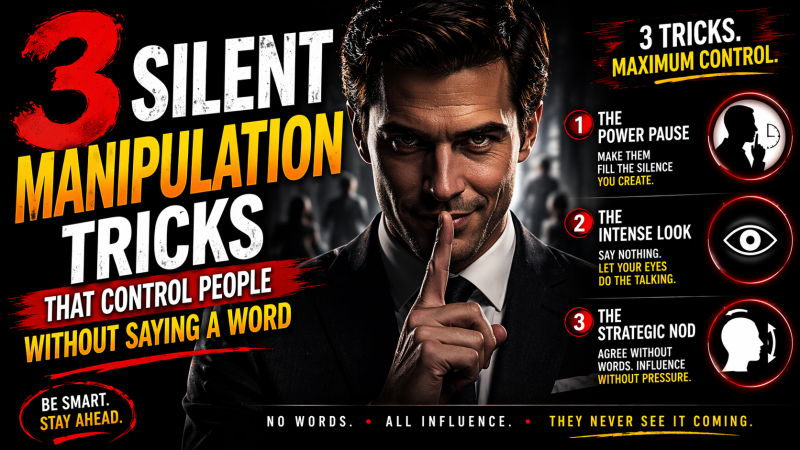
1. The Chameleon Effect – Mirroring and Matching
Definition: Mirroring (or matching) is the unconscious imitation of another person’s gestures, posture, tone, or expressions. People often mirror because it feels right: it signals rapport and empathy. The Chameleon Effect research shows we naturally mimic those we like, making them like and trust us more.
Psychological Mechanism: When someone mirrors you – for example, crossing their arms when you do, or matching your smile and tone – it activates your brain’s mirror neurons and a sense of “we’re alike.” Studies find that mimicry increases rapport, liking and trust between people. Psychologists note that salespeople, therapists, or negotiators deliberately use mirroring to make clients comfortable and agreeable. In short, matching body language creates unconscious comfort: targets tend to open up or say “yes” more easily.
Examples (Reels/Scenarios):
- Viral Tip: A well-known Reel shows an interviewer subtly adopting their guest’s seated posture and hand gestures. Viewers comment that the guest “instantly warmed up,” illustrating how mirroring can smooth conversation. (Citing [35] insight on rapport.)
- Friendship Scenario: Picture two friends chatting; one adopts the other’s nodding rate and word choice. Later, the second friend says they “feel understood.” Though no words of agreement were used, the mimic created sympathy.
- Online Demo: Social media “body language experts” often demo mirroring by having one person mimic another’s play movements, proving the chameleon effect in real-time.
Ethical Framing & Alternatives: Mirroring is not inherently evil – it’s often a genuine empathy tool. The ethical approach is organic mirroring (subtly reflecting genuine shared sentiment). Unethical use is purposeful mimicry to deceive trust (e.g. imitating a leader to gain favor). An alternative to manipulative mirroring is to focus on active listening and honest empathy. Instead of copying gestures, one could simply nod encouragingly or verbally acknowledge others to build trust.
Tips to Recognise & Resist:
- Watch for overdone matching. If someone’s movements or expressions almost exactly echo yours throughout a conversation, pause to ask why it feels “too synced.” Genuine rapport often builds more gradually.
- Notice inconsistent cues: If their words don’t match the warm body language (e.g. a fake smile with harsh words), trust the verbal meaning.
- Resist: Stay aware of your own posture. Deliberately vary your gestures (uncross arms, shift posture). If you feel unusually agreeable or trusting, take a moment to “slow down” the conversation and think independently.
- Set boundaries: If a stranger mirrors excessively, mentally step back. Ask clarifying questions (forcing words) before agreeing to requests.
- Self-talk: Remind yourself “I’ll decide based on facts, not only how comfortable they make me feel.”
Citations: Psychology Today explains that mirroring tends to make people feel similar and trusting. Known rapport-building guides also stress conscious use of matching in ethical communication (e.g. therapy, sales).
2. Dominance Body Language – Posture, Gaze, and Space
Definition: Dominance cues are nonverbal signals conveying power or intimidation. This includes posture (taking up space), eye contact (staring down), and personal space. For instance, standing with arms akimbo or leaning over someone can nonverbally command authority.
Psychological Mechanisms: These cues tap into our social hierarchies. Research and counseling literature note that a dominant posture (tall stance, puffed chest) signals authority, making others feel smaller. Intense, unwavering eye contact disrupts usual social breaks in gaze and can make the target uncomfortable and submissive. Intruding into someone’s personal space (standing too close, looming) triggers physiological unease; studies show such invasion is perceived as aggressive dominance. In combination, these signals can coerce compliance: if a colleague stands over you refusing to speak, you may speak up faster.
Examples (Reels/Scenarios):
- Office Reel: A viral Reel reenacts a manager berating an employee. Notice how the manager stands towering and insists on direct eye contact, wordlessly setting intimidation. The employee breaks eye contact and quickly apologizes without the manager raising their voice.
- Family Real Life: Many share Instagram videos of strict parents giving the “silent stare” (ice-cold gaze) at misbehaving kids. Viewers comment “Mom didn’t need to say a thing – we obeyed instantly.” This silent stare uses eye contact and posture to assert control.
- Public Example: In a political debate clip (commonly reshared online), one candidate leans in across the podium and fixes the other with a steady gaze. The second candidate visibly shrinks back and stumbles over words, illustrating how nonverbal dominance can “win” interaction without additional argument.
Ethical Framing & Alternatives: Power poses and direct eye contact are not inherently wrong – they build confidence in oneself. The ethical difference is intent. Using a bold posture to genuinely project confidence (e.g. during a presentation) is constructive. Using it to threaten or silence others is manipulative. Ethically, one can maintain “powerful body language” by standing or speaking clearly to express sincerity, not aggression. In conflict, alternatives include open gestures, stepping back instead of leaning in, and friendly eye contact to encourage dialogue rather than fear.
Tips to Recognise & Resist:
- Recognise cues: If someone suddenly looms over you, stands directly behind you, or fixes you with a hard stare, these may be intimidation tactics. Cross-checked by context (e.g. confrontation) vs casual.
- Recognise feelings: Feeling physically cramped, anxious, or “chased” often indicates personal-space violation.
- Resist: Maintain your own comfortable space. Gently step back or turn sideways. Use a calm firm tone or stance of your own (e.g. uncross your arms confidently to break the submissive body language).
- If eye contact feels oppressive, look slightly away and hold ground verbally – they can’t “freeze” you by gaze alone.
- If someone sits or stands over you, stand up or move to a more even footing to neutralize their advantage.
- Seek support: If repeated intimidation occurs (e.g. a boss), talk to HR or a mediator. Document instances and assertively state discomfort (“Please give me a moment” or “Let’s discuss calmly.”).
Citations: Body-language experts note that dominant posture and staring are classic intimidation signals. Overcoming them involves creating space and maintaining composure (overcomewithus.com).
3. Strategic Silence – The Power of the Unspoken
Definition: The silent treatment (stonewalling) and strategic pauses are tactics where someone deliberately withholds speech or contact to influence others. Stonewalling typically means ignoring or giving only one-word responses as punishment. A more neutral form is simply pausing before replying or maintaining intentional silence during discussions. Both operate without explicit words.
Psychological Mechanism: Silence can psychologically pressure the other person. Stonewalling as abuse: Psychology sources warn that refusing to communicate is often a tool of control in relationships. The target feels anxious, guilty, or desperate to regain connection, which can force them to comply or concede. This exploits humans’ need for social feedback. On the other hand, a brief silence can also create reflection: negotiation research shows pauses can actually lead people to think deeply and may uncover more value (though this is a constructive use, not for coercion). Manipulative silence (especially in personal relationships) relies on emotional discomfort: the “cold shoulder” induces insecurity.
Examples (Reels/Scenarios):
- Relationship Reel: A TikTok sketch depicts a partner giving the silent treatment after a minor argument. The other partner anxiously tries to apologize repeatedly; the silent partner finally speaks only when they see compliance. Viewers note “He didn’t say anything for hours, and she was panicking to fix it!”
- Public Example: A viral Instagram conversation mockup shows a colleague refusing to answer questions after a dispute. The frustrated employee ends up acquiescing (“Fine, let’s do it your way”) just to break the silence.
- Historical Example: Even on news clips, reporters point out that dictators often refuse media questions to regain control of a narrative, using silence to unsettle interviewers until the latter walks away.
Ethical Framing & Alternatives: Silence is a neutral tool – but using it as punishment or manipulation is harmful. Ethically, taking a pause to think (as in thoughtful negotiation) can be positive. However, shutting someone out to punish or force agreement is abusive (as Psychology Today highlights). Alternatives include calmly stating “I need a moment,” or taking breaks during conflict to cool down constructively. Using pauses strategically (e.g. in a debate or interview) can be useful, but always with transparency (“Let me consider your question.”) rather than punitive silence.
Tips to Recognise & Resist:
- Recognise: Stonewalling often feels chilly and purposeful: the person turns away, stops responding, or uses curt answers. If they become suddenly “quiet” despite previously talking, it’s a red flag of manipulation.
- Check patterns: If punishment silence follows disagreements regularly, that’s abusive stonewalling.
- Resist: Don’t panic. Gently call it out: “I notice we’re not talking. Can we take a break and discuss later?” Giving time can break the cycle.
- Maintain boundaries: If someone ignores you to get a reaction, remain calm. Engage in other tasks or speak with a third party until they’re ready. Don’t grovel or over-apologize.
- Use assertive communication: Instead of pleading, say “I want to resolve this, but I won’t beg for attention.” This frames silence back at them (“I’ll wait until you choose to respond.”)
- Protect self-worth: Remind yourself that silence manipulation is their issue; focus on what you need (support, facts) not just ending the silence.
Citations: Psychology Today notes silent treatment is often a manipulation and control tool. MIT Sloan research also acknowledges pauses can help negotiation if mutual, but warns silent “needle drops” can feel tense.
Table: Comparing the 3 Silent Manipulation Tricks
| Trick | Mechanism | Nonverbal Cues | Typical Intent | Impact on Target | Resistance Strategy |
|---|---|---|---|---|---|
| Mirroring/Matching | Builds rapport via subconscious mimicry | Copying posture, gestures, tone | Gain trust/likability | Feels understood and trusting | Notice overly synchronized behavior; pause & analyze; assert own posture/style |
| Dominant Body Language | Asserts power by physical cues | High posture (standing tall), intense eye contact, infringing personal space | Intimidate or control | Feels small, anxious, pressured | Step back; uncross arms; break gaze respectfully; create neutral distance |
| Strategic Silence | Creates discomfort/ reflection through no response | Turning away, one-word answers, prolonged pauses | Punish, coerce confession or concessions | Feels anxious, guilty, desperate to connect | Call it out calmly; set a time to talk; focus on facts not gap; maintain self-respect |
Recognise & Resist Silent Manipulation
Spot the clues: Nonverbal manipulation often feels like a gut instinct. Remember: “If something feels off, it probably is.” Watch for mismatches (e.g. overly warm body language + cold words) or sudden shifts (politeness turning into glaring silence). Trust your feelings: anxiety, sudden obligation, or confusion can signal someone pulling strings. Reviewing the table above can help you detect specific tactics in action.
General tips to resist:
- Stay Mindful: Regularly check if you’re agreeing just to be liked. Slow down decision-making and verify facts.
- Own Your Space: Maintain comfortable personal boundaries (physically and conversationally).
- Communicate Clearly: Politely call out the tactic: e.g. “I notice you’re quiet. Is everything okay?” This breaks the cycle of silence.
- Seek Feedback: Discuss the situation with others you trust to get perspective (“Did you notice that person mirroring me a lot?”).
- Learn Assertiveness: Refuse unreasonable requests made under manipulation; practice saying “no” respectfully. For example, “I need a moment to think – I’ll get back to you.”
- Self-Care: If manipulation is repeated (e.g. by a friend or partner), consider distancing yourself or seeking professional support.
Combating silent manipulation often means breaking the spell of the unspoken. By staying self-aware and alert to nonverbal patterns, you can neutralise these “mind games” and interact on your own terms.
Frequently Asked Questions
Q1: What is silent manipulation?
A: Silent manipulation refers to influencing or controlling others through nonverbal means, such as body language, facial expressions, or purposeful silence. It works “behind the scenes” of conversation. Psychology experts note that tactics like the silent treatment or strategic gestures can be tools of control. Silent manipulation exploits the fact that humans interpret cues (like posture or tone) subconsciously.
Q2: How can mirroring be a manipulation?
A: While natural mirroring (the chameleon effect) often builds trust, intentional mirroring can be used manipulatively. For example, a salesperson might mimic your gestures to make you unconsciously like them. If overdone or inauthentic, it’s a covert way to gain your compliance. Be aware if someone’s body language is exactly mirroring yours – it might be a tactic to create false rapport.
Q3: Can silence really control someone?
A: Yes. Stonewalling or the silent treatment is a known form of emotional abuse. By refusing to speak, a person can make the other anxious or guilty, pushing them to apologize or concede. Even a well-placed pause can influence a conversation. (Interestingly, research shows in negotiations a pause can lead parties to think more strategically, but in personal contexts silence often pressures people.)
Q4: How do I tell if someone is using nonverbal cues to manipulate me?
A: Look for inconsistency or intensity. Signs include unnaturally perfect body language mirroring, aggressive stares, invading your personal space, or sudden silence when upset. If their nonverbal behavior (e.g. overly intense eye contact) doesn’t match the context, it may be manipulative. Trust your feelings – if you feel unusually pressured, anxious, or unusually agreeable without reason, question why.
Q5: Are these tricks always used maliciously?
A: Not always. Many nonverbal techniques (like maintaining eye contact or open posture) are part of normal communication. Therapists, mediators, and good communicators use mirroring and attentive body language ethically to build understanding. The difference is intent: using them to help or genuinely connect is fine, but using them to coerce or deceive is problematic.
Q6: What should I do if someone intimidates me with their body language?
A: Stay calm and maintain your own boundaries. If someone leans in or glares, take a step back to re-establish space. Meet their gaze briefly, then look away as needed. Use a steady, confident posture yourself. You can also address it: e.g. “You seem upset; let’s talk calmly.” Remember, you don’t have to mirror their aggression.
Q7: Is silence always manipulative in a relationship?
A: Silence is a normal part of communication, but persistent silent treatment is manipulative. If it’s done to punish or control, it’s unhealthy. Occasional pause to cool off can be fine, but using silence repeatedly to make someone feel guilty or to get your way is abusive. Healthy relationships address issues with open communication, not with cold shoulder tactics.
Q8: How can I use pauses or silence without being manipulative?
A: Use pauses transparently: say “Let me think” before a pause, or ask for time when needed. In negotiations, strategic silence can help reflection (as MIT Sloan research suggests), but it should be mutual, not used as punishment. Always follow a pause with a reason or a question, not to make the other person squirm.
Q9: What is an example of a subtle nonverbal manipulation?
A: A subtle example is nodding while speaking. If a presenter nods slowly when stating a fact, listeners may unconsciously agree. (Research shows that nodding can increase confidence in the speaker’s message.) Another is smiling constantly to seem sincere; people tend to trust smiling faces more. These cues quietly push you to go along without realizing.
Q10: Can I train myself not to be influenced by these tricks?
A: You can learn to spot them. Educate yourself on common cues (like in this guide). Practice noticing when you feel oddly pressured or unusually comfortable. Slow down your reactions; ask questions if a situation feels off. Strengthen your assertiveness skills so you respond based on facts, not just feelings. Mindfulness and self-awareness are your best defenses against covert nonverbal influence.