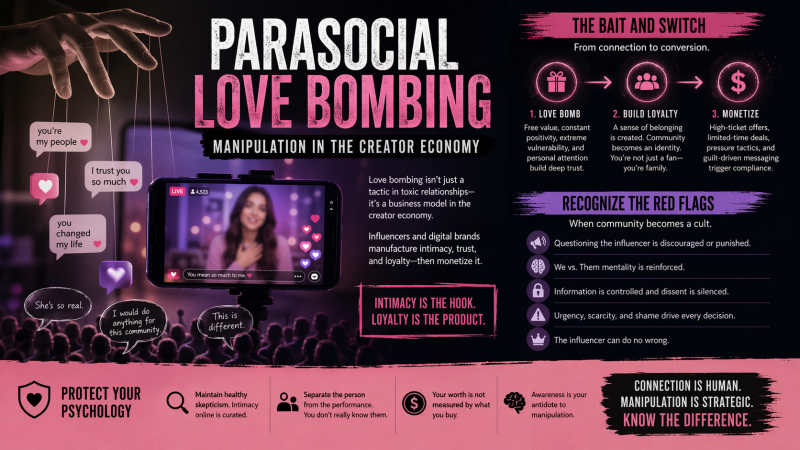
In the influencer era, parasocial relationships – one-sided bonds where fans feel they “know” a creator – are harnessed to build intense loyalty. Some creators go further, deploying a form of “digital love bombing”: overwhelming followers with praise, personal attention and free value to create emotional dependence. Traditionally, love bombing (in cults or abusive romances) means early overload of affection to gain control. Online, it plays out through constant livestream shoutouts, DMs, exclusive groups and personal stories, making followers feel uniquely seen and valued. The line between genuine community and manipulation blurs when that trust is leveraged – for example, to sell expensive courses or products. This article examines how influencers manufacture intimacy, the “bait-and-switch” of free value to high-pressure sales, and how to spot when a supportive community tips into an exploitative echo chamber.
Manufacturing Intimacy and Trust
Influencers deliberately cultivate authenticity and vulnerability to make audiences feel close. As one study notes, the “commercial logic of authenticity” turns an influencer’s personal struggles or traumas into a strategy for growing community and followers. By sharing “behind-the-scenes” glimpses, personal stories or live emotional confessions, creators trigger parasocial bonds. Fans come to feel that “they know me” and “I trust them”, even though the relationship is one-way. Psychology backs this up: parasocial bonds activate the same attachment and trust pathways as real friendships. In practice, this means when a creator addresses followers by name, replies to comments, or insists “I wouldn’t be here without you,” followers feel genuinely valued and connected. That trust makes the creator’s advice or recommendations feel like personal guidance, “not just an opinion” but relational input.
Influencers also tap authority cues and social proof. A user survey explained that relatable experts – e.g. creators sharing credentials or using polished “credibility cues” (correct lighting, tone, brands) – appear as authorities. This triggers authority bias, where we instinctively give more weight to advice from someone we see as an expert (even informally). If a creator seems simultaneously like “trusted expert + relatable friend,” their product pitches feel like identity-confirming decisions rather than sales. In short, creators sell themselves as your friend who also happens to know what’s best for you. Fans often absorb it uncritically: “I trust this person, so what they say must be right”. This confluence of parasocial intimacy and authority is the engine of influence – authenticity becomes “the vehicle for subtle persuasion”.
The “Bait-and-Switch”: From Free Value to Hard Sell
Once followers are hooked, the freebie-to-sales pivot can feel like betrayal. Influencers often lead with generosity – free guides, extended live chats, heartfelt mentorship – to cement loyalty. One cult-recovery blog describes a spiritual YouTuber who “built a massive following by sharing videos on mindfulness and wellness. However, as followers became more engaged, they were encouraged to attend expensive retreats and cut ties with ‘negative influences’ like family and friends”. The parallels to cult tactics are striking: once trust and admiration are secured, offers shift to paid products (courses, memberships, retreats) accompanied by guilt or urgency. Followers, emotionally invested by months or years of engagement, find it hard to question the pitch.
In marketing terms this is digital love bombing turned funnel. As one online marketer puts it, what feels like genuine appreciation (“I wouldn’t be here without you,” personalized shoutouts and gifts) can actually be a sales strategy. The bridge from friendship to funnel is built gradually: “When you feel understood, when you feel the creator gets you, you’re more likely to trust their recommendation. And that trust becomes a gateway for influence… When friendship becomes a funnel, intimacy becomes leverage”. In practice, this looks like an influencer praising followers’ struggles and ideas one moment, then nudging them to an “exclusive” $500 webinar the next. By then, fans may feel indebted or special, so they hesitate to say “no.”
High-pressure sales techniques often follow the love-bombing. Influencers may promise that only loyal community members will get access to limited offers, or they fast-slide to testimonials to prove “everyone’s in.” Scarcity cues (“only 2 spots left!”) and intense personal encouragement (direct messages pleading, “I know you want this for yourself”) exploit the emotional bond. Followers have been primed to respond – studies confirm scarcity and social proof cues in influencer posts significantly boost impulse buying. By rewarding investment (e.g. early fans get a discount or special status), creators deepen commitment right before presenting a big purchase.
Recognizing an Echo Chamber and Exploitation
A true supportive community invites questions and outside perspectives. An exploitive one punishes doubt and feeds an echo chamber. In dangerous scenarios, creators encourage fans to love-bomb each other and excoriate critics. For example, cult-leader strategies on YouTube include “Love Bombing in the Comments – followers are encouraged to leave positive comments, creating an echo chamber of validation. This makes dissenting voices appear as outliers and discourages questioning”. In influencer settings, this looks like fan-driven praise on every post and trolls swiftly attacked or silenced. Offline or online, if genuine feedback is steadily filtered out, it’s a red flag.
Over time, an exploitative creator will narrow acceptable views, framing themselves as the sole “truth-teller.” As psychologist Mozelle Martin describes, toxic creators “narrow [thought]… train it, and bend it so it keeps moving along preset lines”. Any disagreement becomes framed as personal betrayal: “disagreement is no longer disagreement, it becomes attack,” outsiders are enemies, and critics are dismissed as “corrupt” or “jealous”. In such a community, independent thinking is replaced by parroting the influencer’s catchphrases and enemies. Martin warns: “if you are not allowed to question the one you follow, then your thinking is already in trouble”. Key signals of this unhealthy echo chamber include:
- One-sided messaging. Posts and discussions only reinforce the influencer’s worldview. Alternate sources or expert opinions are disallowed or sneered at.
- Rewarding blind loyalty. Fans praising their shared identity (e.g. memes, inside jokes) are “insiders,” while any doubt elicits guilt or shame.
- Emotional manipulation. Content often plays on fear or victimhood. Followers are made to feel special (“chosen”, “seen”, “aware”), so leaving feels like betraying the group.
- Commercial pressure. The community increasingly revolves around buying into programs. Help or advice is just a lead-in for upsells, rather than an end in itself.
As one blogger puts it: creators who “demonize outsiders, control what followers are ‘allowed’ to consider, [and] reward blind loyalty over independent thought” aren’t merely influencers, they are shaping followers’ beliefs for their own ends. When a group shifts to policing thoughts and equating marketing with mission, it has likely become exploitative.
Trends and Psychological Lens
This phenomenon has drawn attention because it reinterprets classic abuse tactics in a digital frame. Many young people unwittingly replace traditional guides (teachers, elders, experts) with influencers. Algorithms and design amplify this by promoting content that elicits strong emotions and loyalty. A recent analysis notes that influencers “exploit psychological mechanisms – not by shouting, but by quietly whispering: you belong here”, using parasocial bonds, scarcity and authenticity facades to drive behavior. For audiences especially in moments of vulnerability or uncertainty, this curated intimacy can substitute for real human support. Unfortunately, it comes with little critical oversight: an untrained stranger posing as a mentor can wield disproportionate sway.
Key biases at play include authority bias (trusting perceived authority without verification) and social proof (believing popularity equals truth). As a psychology expert notes, “if someone speaks with confidence, emotional intensity and narrative clarity, followers grant them legitimacy because of who they seem to be” – not because of actual credentials. Similarly, if an influencer’s product goes “viral” or has millions of likes, fans may assume it must be valuable (the halo effect and social proof inflation). Together with the ever-present fear of missing out (FOMO) and confirmation bias, the creator economy has weaponized emotion into commerce.
Practical Guidance for Consumers
To stay grounded, it helps to recognize these tactics and trust your judgment. Consider these practical tips:
-
Question the narrative. Does the creator discourage alternative viewpoints or label detractors as “haters”? If skepticism is branded disloyal, step back. As one expert advises, “If you are not allowed to question the one you follow, then your thinking is already in trouble”. Healthy communities tolerate debate and admit uncertainty.
-
Beware flattering urgency. Genuine mentors won’t frantically chase you to buy their course. If every sign is “You’re special! Don’t miss this!” followed by a sales pitch, check the motive. Influencers adept at love bombing will make you feel indispensable right when they ask for money. Remember: Authority bias means feeling close to someone feels like credibility, but it’s a bias. Independent experts usually emphasize facts and are transparent about any incentive they have.
-
Diversify your feed. Actively seek out multiple voices and expert sources. Rather than relying on one influencer, compare advice with professional perspectives (therapists, academics, official institutions). Research shows echo chambers narrow understanding; purposefully exposing yourself to different opinions preserves critical thinking.
-
Look for substance over style. Influencer content can be entertaining, but ask: am I learning facts or just being told “I’m one of you” again? If a creator constantly sells solutions (“you’ll feel better/successful/etc. if you buy this”) without acknowledging complexity, be cautious. As one writer summarizes: “the architecture of the relationship was designed to make you predisposed to follow”. If it sounds too simple or emotionally charged, step outside that funnel.
-
Stay connected to real life. Keep family or friends involved in your online engagements. If a community makes you feel guilty about outside relationships or pressures you to sever ties (a classic cult move), recognize that as a warning sign. Real support encourages balance, not isolation.
By understanding the psychology of parasocial love bombing, consumers can enjoy genuine communities while avoiding exploitation. Awareness is the first step: knowing that “social proof makes popularity feel like truth” and “scarcity makes urgency feel like importance” helps you pause rather than impulsively buy. In the end, influencers build empires on the currency of emotion. Reclaiming our own judgment – questioning before buying, valuing diverse input, and resisting flattery alone as a basis for trust – ensures that digital relationships remain empowering rather than manipulative.
Sources: Academic research and expert analyses highlight how parasocial bonds and authority cues are exploited in influencer culture. Consumer reports and case studies (from YouTube controversies to cult-recovery journals) illustrate real-world tactics of “online love bombing” and echo chambers. These insights inform the above strategies for spotting and resisting manipulative community dynamics.