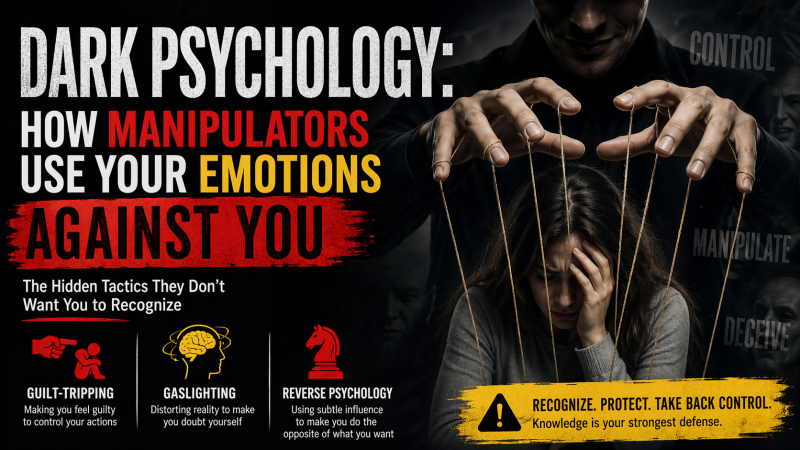
Manipulative individuals often exploit others’ emotions through dark psychology, defined as the use of psychological tactics to influence or control people in harmful ways. The goal is typically personal gain (power, money, or gratification) with little regard for others. People high in Machiavellianism, psychopathy, or narcissism – known as the Dark Triad traits – are especially prone to using these tactics. They tend to lack empathy and justify hurting others to achieve their goals. Recognising these tactics is crucial for protecting yourself.
Figure: A puppet on strings symbolises how manipulators control victims behind the scenes. Alt text: A female puppet in a red dress controlled by strings. Manipulators treat victims like puppets to pull emotional strings. This system often starts subtly and escalates over time.
The Dark Triad: Machiavellianism, Narcissism, Psychopathy
The Dark Triad comprises three interrelated personality traits:
- Machiavellianism: Characterised by cunning, strategic manipulation and a cynical worldview. High-Machs are “manipulative, deceitful and self-interested”. They view others as tools to achieve their goals and often lack empathy, maintaining a detached, unemotional façade.
- Narcissism: Defined by grandiosity and entitlement. Narcissists crave admiration and believe they are superior; they often show “a lack of empathy for others”. They may manipulate by charming others initially, then belittle them to maintain control.
- Psychopathy: Involves impulsivity, thrill-seeking and cold callousness. Psychopathic individuals are highly manipulative and have “blunted emotions” with little remorse. They can be charming but are prone to taking risks and violating rules without guilt.
Though distinct, these traits overlap: all three involve low empathy and a readiness to exploit others. Research shows people exhibiting any of these traits are more likely to use dark psychology tactics. For example, Machiavellians will plan manipulative strategies in advance, whereas psychopaths might react impulsively, and narcissists will manipulate to secure admiration. Understanding these profiles helps spot manipulators in your life.
Common Manipulation Tactics
Gaslighting
Definition: Gaslighting is a form of psychological manipulation that makes a victim doubt their own reality. The Merriam-Webster dictionary defines gaslighting as “psychological manipulation… that causes the victim to question the validity of their own thoughts, perception of reality, or memories and typically leads to confusion, loss of confidence and self-esteem”.
Signs: The manipulator may flat-out deny things they did or said (even if you saw them), accuse you of being forgetful or crazy, or twist facts. You may feel constantly confused, defensive, or feel like you’re “walking on eggshells” around that person. Others may notice you seem unusually anxious or self-doubting.
Example: A partner argues with you, then insists the argument never happened or tells you “you must be imagining things” when you bring it up. Over time, you begin to question your memory of events.
Countermeasures: Keep a record (write dates and details of incidents) to validate your experience. Seek outside opinions (friends, diaries) to confirm reality. Trust your gut – if you feel consistently mistrustful, it may indicate gaslighting. Professional therapy can help rebuild confidence. Boundary-setting is key: calmly state facts (“This is what I remember…”).
Guilt-Tripping
Definition: Guilt-tripping is when someone intentionally makes you feel guilty or responsible to manipulate your behavior. PsychCentral defines it as “the intentional manipulation of another person’s emotions to induce feelings of guilt”. It often preys on your sense of duty or caring nature.
Signs: You hear phrases like “After everything I’ve done for you…” or “I guess you don’t really care about me,” implying you owe them something. The person may brag about past favors or use a martyr-like tone. You might constantly apologise or do things “just to avoid feeling guilty”.
Example: A friend pouts and says, “I thought you were my best friend. You never call me anymore,” pressuring you to rearrange your schedule to appease them, even when you had valid reasons.
Countermeasures: Recognise that healthy relationships aren’t based on guilt. When you feel guilt-tripped, pause: ask yourself if their demands are reasonable. Respond with “I understand you’re upset, but I can’t change my plans,” or “I value our friendship, but I also have my commitments.” Setting clear boundaries (“I will call you tomorrow, I promise”) and following through helps avoid continuous guilt-games. Remind yourself that you aren’t responsible for others’ feelings.
Reverse Psychology
Definition: Reverse psychology is a manipulation technique where someone encourages you to do something by suggesting you do the opposite. It relies on reactance – the instinct to defy when feeling controlled.
Signs: The manipulator will make statements like “I bet you won’t do X” or “You probably don’t want Y anyway,” pushing you to prove them wrong. You may notice yourself acting contrary to their suggestion, often against your initial preference.
Example: A spouse wants you to spend more quality time, so they say, “Oh, you’re free this weekend? You probably want to hang out with your friends instead of me.” You might then decide to clear your weekend to be with them out of spite or loyalty.
Countermeasures: Recognise this as manipulation: simply call it out (“Are you using reverse psychology on me?”) or ignore the bait. Communicate clearly what you want or plan to do, unaffected by their provocation. Stay aware of your true feelings: if you find yourself giving in just to defy them, pause and reconsider your motives.
Love Bombing
Definition: Love bombing is an intense display of affection and attention designed to overwhelm someone and create a rapid emotional bond. The manipulator “bombs” you with praise, gifts, and flattery to win trust and gain control.
Signs: Excessive compliments, constant texts or calls, lavish gifts early in the relationship. Everything feels “too good to be true”. Often after the initial phase, the intensity abruptly changes to criticism or indifference.
Example: A new colleague showers you with support and praise on day one (“You’re so talented! We’re lucky to have you!”) then later uses this leverage to guilt you when you disagree or set boundaries.
Countermeasures: Slow down the relationship. Appreciate kindness but remain cautious if it feels over-the-top. Keep friendships and routines outside the relationship. Watch for shifts: when affection turns into guilt or control, step back. Maintain your own identity; don’t be dazzled into dependence.
Triangulation (and Other Tactics)
Definition: Triangulation involves pitting two people against each other to increase a manipulator’s power. For example, a manipulator might talk negatively about you to others or compare you unfavorably to someone else to provoke jealousy or defensiveness.
Signs: You overhear conversations where the manipulator is “venting” about you to a third person. You may feel pressure or jealousy because someone else is being set up as a rival or “ideal.”
Example: A parent constantly compares siblings to each other (“Why can’t you be more like your sister?”) to control behavior.
Countermeasures: Confront calmly if possible (“It hurts when you compare me”). Refuse to be drawn into conflicts. Recognize this tactic as unfair – maintain perspective that you are not competing.
(Other tactics include projection, silent treatment, intimidation, etc., but space is limited. The principles above – setting boundaries, staying grounded, seeking support – apply generally.)
Recognising Emotional Manipulation
Victims of dark psychology tactics often feel confused, anxious or “crazy”. They may second-guess themselves or feel undeserving of love. Repeated guilt, doubt, and self-blame are red flags. Common signs include feeling unusually tired or drained after interactions, becoming isolated from friends/family due to the manipulator’s interference, or frequently apologising just to avoid conflict. The NHS notes that emotional abuse (a form of manipulation) often involves blame, belittling, or denial of the victim’s feelings. If you recognise these patterns, realise they stem from the manipulator’s tactics, not your fault.
Examples and Case Studies
- Case Study – Workplace Gaslighting: Sara’s manager constantly changes project details and then accuses Sara of mistakes. When Sara objects, he insists it’s all in her head. Over months, Sara doubted her competence. Eventually, she began documenting communications and discussing them with HR. Realising the pattern empowered her to set limits (e.g. asking for email confirmation of changes) and build a case for her confidence.
- Anecdote – Family Guilt-Trip: Tom’s mother frequently says, “I raised you better,” whenever he makes independent life choices. She made him feel enormous guilt about living away from home. Tom eventually joined a support group for adult children of narcissistic parents, learned it was normal to set boundaries, and stopped apologising for his choices.
- Example – Dating and Love Bombing: Emily’s boyfriend turned from showering her with gifts to criticizing her friends, making Emily feel she needed to defend the relationship and isolate herself. She noticed this shift and decided to seek couples therapy, where they addressed these patterns.
- Profile Example – Machiavellian at Work: John is charming in meetings but privately spreads rumors to undermine colleagues (triangulation). He appears helpful but actually extracts favours (“Now that I’ve helped you, you owe me this report!”). Once his colleague Jane recognized the pattern, she responded factually (“I’ll do the report on schedule”) and reduced personal conversations with him.
These examples illustrate that awareness is key. Realising you are being manipulated is the first step to countering it.
Prevention and Recovery Strategies
- Educate Yourself: Learn about manipulation tactics (like this article). Knowledge itself is empowering. As one expert advises, “Educate yourself about manipulation, establish clear boundaries, and trust your instincts”. Recognising tactics (gaslighting, guilt-trips, etc.) demystifies them.
- Set Firm Boundaries: Decide what behaviour you will not tolerate. Politely but firmly enforce your limits. For example, “I will not continue this conversation if you raise your voice” or “I need 24 hours to decide, and I will stick to it.” Consistency shows the manipulator that you won’t be easily swayed.
- Seek Support: Talk to trusted friends or family about what’s happening. Their outside perspective can confirm your reality. Consider professional help: therapists or counsellors are trained to help you process emotional abuse. In the UK, resources include the NHS Domestic Abuse helpline and specialist organisations (e.g. Women’s Aid). For emotional support anywhere, charities like Mind (UK) or the Royal College of Psychiatrists recommend therapy for ongoing emotional distress.
- Document Interactions: Keeping a journal or saving messages/emails can help you maintain a clear record of events. This counters gaslighting and self-doubt by providing evidence of reality.
- Self-Care and Inner Work: Manipulation can erode self-esteem. Engage in activities that rebuild confidence: exercise, hobbies, meditation, or mindfulness. Remind yourself of your strengths. Practice saying “no” in low-stakes situations to build assertiveness.
- Plan Safely for Escape (if needed): In abusive cases, plan an exit safely. The NHS recommends having a support network and, if necessary, contacting authorities (in emergencies dial 999 in the UK). Secure your finances and documents, and consider legal advice if harassment escalates.
Ethical Considerations & Disclaimers
This article is informational only. It is not a substitute for professional advice (medical, legal or psychological). If you are experiencing severe emotional abuse or mental health issues, please consult a qualified therapist or doctor. We cite authoritative sources (APA, NHS, academic research) where possible. Opinions or examples given are illustrative and generic, not meant as personal diagnoses. Always verify advice with professionals.
Tables: Manipulation Tactics and Persona Profiles
| Tactic | Definition | Signs | Example | Countermeasure |
|---|---|---|---|---|
| Gaslighting | Psychological manipulation making you doubt your reality. | Denying facts, dismissing feelings; frequent confusion, low self-esteem. | Partner insists “I never said that” about an event you remember clearly. | Keep records (notes/emails); consult others; trust your memories; therapy. |
| Guilt-Tripping | Inducing guilt to coerce behaviour. | Blame (“after all I’ve done”), passive-aggression, obligation. | “You never call; I’m such a lonely mother.” | Acknowledge feelings but set limits: “I love you, but I’ll call weekly.” |
| Reverse Psychology | Encouraging opposite action to spur compliance. | Phrases like “You wouldn’t want X,” provoking defiance. | “I doubt you’d want to stay and talk to me.” → you stay. | Call it out or ignore the bait; decide based on your true wishes. |
| Love Bombing | Overwhelming with affection to gain trust. | Excessive praise, gifts early on; sudden withdrawal. | New friend showers you with compliments and gifts daily. | Slow pace: maintain outside friendships; note sudden changes in behaviour. |
| Triangulation | Playing parties against each other. | Spreading rumors; comparisons; pitting people off. | Parent says, “Why can’t you be more like your sister?” | Refuse to engage in the conflict; respond calmly; seek clarity from all sides. |
| Persona | Machiavellian | Narcissistic | Psychopathic |
|---|---|---|---|
| Key Traits | Calculating, strategic, manipulative (views others as means; goal-oriented) | Grandiose self-image, requires admiration, sees self as special. | Bold, impulsive, thrill-seeking, aggressive; lacks remorse. |
| Empathy | Low cognitive empathy (can understand feelings but not feel them). | Low affective empathy (trouble caring about others’ feelings). | Very low empathy, callous disregard. |
| Manipulation Style | Long-term planning; calm, charming front; uses intellect. | Flamboyant and dramatic; plays victim or uses charm for admiration. | Aggressive or coercive; may use intimidation or bravado; seeks immediate gain. |
| Behaviour Example | Smoothly exploits loopholes, spins truths to benefit self. | Flips between idealizing and devaluing others; belittles to feel superior. | Breaks rules without guilt; may gaslight or lie habitually to avoid consequences. |
| Counter | Concrete evidence and strict enforcement of agreements stops the games. | Set strong boundaries; refuse excessive praise or flattery; reality-check inflated claims. | Avoid risky scenarios; insist on clear rules; get support (law enforcement if needed for threats). |