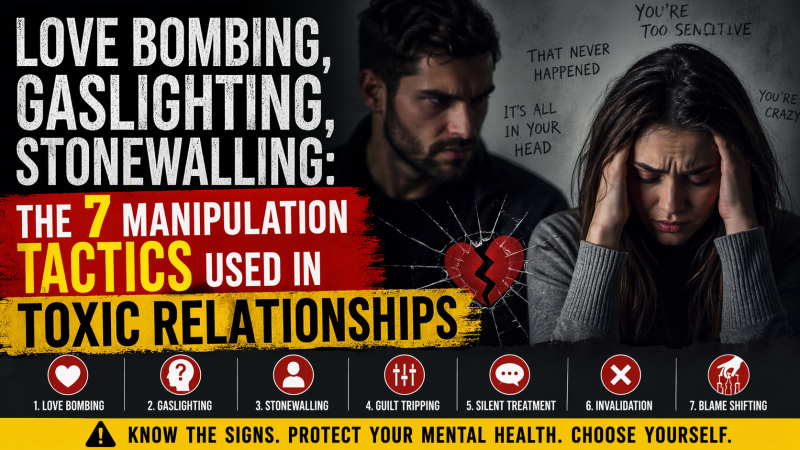
⚠️ Content Warning: This article discusses emotional abuse and manipulation in relationships (love bombing, gaslighting, etc.) which some readers may find distressing. If you feel overwhelmed, please consider seeking support or skip ahead to the resources.
Engaging in the honeymoon phase of a relationship can sometimes feel wonderful, but in toxic relationships, early intense affection can be a form of manipulation. One common tactic is love bombing, where a partner showers you with excessive praise, gifts, and affection to gain control. Initially this may feel flattering, but it often creates unrealistic pressure and dependence. PsychCentral explains that love bombing “is manipulation through excessive attention, often showering you with gifts, compliments, affection, and time”. For example, a love-bomber might declare love within days, buy lavish gifts, or constantly text/flirt. The signs include fast-moving intimacy and feeling like the “biggest catch” immediately. If your partner demands constant attention or gifts to win your approval, this may be love bombing.
To cope with love bombing, set clear boundaries. Slow the relationship down, keep your own hobbies and friendships, and maintain independence. Politely decline gifts or excessive attention if it feels overwhelming. Healthy relationships respect boundaries and pace. If you still feel confused or pressured, talking it over with a trusted friend or therapist can help you stay grounded. If the pattern continues or escalates beyond your comfort, consider seeking advice from a counsellor or support group about coercive control in relationships.
Gaslighting is another tactic where an abuser erodes a victim’s sense of reality. Psychology Today defines gaslighting as “an insidious form of manipulation and psychological control,” where the victim is “fed false information that leads them to question what they know to be true, often about themselves”. In practice, a gaslighter might deny things you clearly remember or blame you for their own actions. For instance, they might say “I never said that” or accuse you of being “too sensitive.” Over time, victims may doubt their memory or sanity. The UK NHS describes gaslighting as emotional abuse that “leads someone to question their thoughts, memories and the events happening around them”.
Common gaslighting signs include repeated contradictions (“That never happened”), blame-shifting (“You caused this”), and love bombing again to confuse (“I love you so much, can’t you see?”). Victims often feel anxious, second-guess themselves, or apologise frequently. PsychCentral notes that gaslighters often mix lies with occasional kindness to keep the victim off-balance. If you sense your partner constantly denies reality or makes you feel “crazy,” you may be experiencing gaslighting.
Coping with gaslighting means trusting your perception and documenting events if needed. Keep a journal of conversations or dates of incidents. Seek a second opinion from friends or family who witnessed events. Therapy can help rebuild your confidence. It’s crucial to validate your feelings: remind yourself that your memories and perceptions are valid. If gaslighting continues, create distance or seek professional help. Over time, ongoing gaslighting can seriously harm mental health, so getting support is wise.
Image: A woman looks upset as her partner ignores her on his phone, illustrating the silent treatment or stonewalling. Alt: Upset woman being ignored by man on phone (silent treatment).
Stonewalling (Silent Treatment) is the practice of completely shutting down communication to control or punish. Relationship expert John Gottman identified stonewalling as one of the “Four Horsemen” of relationship conflict; repeated silent treatment often predicts severe damage or breakup. SimplyPsychology explains stonewalling as a “communication tactic where a person completely shuts down during a discussion or argument, becoming non-responsive”. In other words, one partner refuses to speak or respond, leaving the other feeling isolated. Common signs include giving only single-word replies, refusing eye contact, or walking away mid-conversation.
Stonewalling is often deployed after gaslighting or arguments: by refusing to respond, the abuser regains control and leaves the victim anxious and pleading. Over time, it can feel like punishment. Psychology Today notes the silent treatment “involves intentionally ignoring or refusing to communicate with someone” and is used as a tool for manipulation and control. Victims often feel desperate to reconnect, replaying conversations in their mind, which can heighten anxiety. The abuser may later claim they were “busy” or that you caused the silence, again shifting blame.
Coping with stonewalling starts by not taking it personally: recognise it is the abuser’s choice, not your fault. When the silent treatment happens, give space but set a limit. For example, say, “I’ll give you 20 minutes and then I’m going to leave.” If they come back, try discussing calmly. If silence persists, do not chase them or beg; this only reinforces the power imbalance. After calm is restored, consider having a planned “time-out” strategy: agree that either partner can pause a heated discussion and revisit it later. If stonewalling feels unending or you feel unsafe, seek help. As Psych Central warns, persistent stonewalling can harm emotional intimacy.
Guilt-Tripping is when one person uses guilt to manipulate another. It might involve reminding you of past favors (“After all I’ve done for you…”) or implying you’re a bad person for setting boundaries. PsychCentral defines guilt-tripping as making you feel “responsible or guilty” for someone else’s feelings or situation. Signs include comments like “If you loved me, you’d…” or “I guess I’ll just suffer alone”. Victims often feel obliged to comply to avoid feeling like an ungrateful partner.
To counter guilt-tripping, recognise these comments are manipulative. Practice assertive communication: respond calmly, “I feel hurt when you say that” or “I understand you’re upset, but I need X for myself.” Reinforce that healthy love does not require you to sacrifice all your needs. If someone keeps pressuring you by guilt, consider seeking external support to set firmer boundaries or to discuss how the relationship affects you.
Triangulation involves bringing a third person into conflicts to manipulate and control others. For example, a partner might compare you unfavorably to an ex or share private grievances with a friend to turn people against you. Verywell Mind describes triangulation as inserting a third party into a conflict “to create division or gain control,” a classic “divide and conquer” tactic in toxic dynamics. Signs include being pitted against friends/family (“They said you can’t be trusted”) or your partner confiding in another to belittle you indirectly.
Coping with triangulation means refusing to play along. Do not involve the third party in your issues; address problems directly with your partner if possible. Keep a healthy support network: talk with unbiased friends or counsellors who can offer perspective. If your partner attempts to isolate you by triangulation, reach out immediately to those you trust. Remember, you deserve direct communication in a relationship; if someone avoids talking to you directly, that’s abusive.
Projection (Blame-Shifting) is when the abuser attributes their faults or feelings onto you. For example, they may accuse you of being jealous when they are actually jealous, or lying when they are the ones lying. Signs include frequent accusations (“You’re the one always shouting!”) where it’s actually the partner who is verbally aggressive. This confuses victims into doubting themselves. The PsychCentral article notes manipulators often use moving goalposts and shifting blame so you “never win”, a form of psychological warfare.
To handle projection, calmly document facts and focus on your own feelings. You might say, “I’m hearing that you think I did X. Here’s what happened… I feel upset when I’m accused unfairly.” Stay factual and avoid getting drawn into the blame game. If the pattern continues, seek support: therapists can teach coping skills like self-validation. It’s important to remember that being blamed for everything is a manipulation—discussing it with a counselor or trusted friend can help you see the situation more clearly.
Withholding Affection (Conditional Love) is a subtler but powerful tactic. Instead of overt punishment, an abuser may withhold love, sex, or emotional support to control you. For instance, they might refuse intimacy or affection until you obey them. This can overlap with the silent treatment but is more about emotional coldness. Signs include a partner suddenly “going cold” or punishing you by being distant. You may feel constantly anxious to please them just to get back on track.
Coping involves asserting your needs. Calmly express that you feel hurt when affection is withdrawn, and that your emotional needs matter. Consistently reinforce that love should not feel conditional. If attempts to communicate fail, seek outside help. Therapists often recommend focusing on self-care: engage in activities that make you feel loved and secure (friends, hobbies), rather than hanging on your partner’s affection.
When to Seek Help: If any of these tactics are frequent or escalating, it may be time to reach out. Persistent manipulation can erode self-esteem and mental health. You might notice yourself feeling anxious, depressed, or unable to make simple decisions. Trust these feelings. Support is available: contact a counsellor, local domestic abuse service, or a helpline. In the UK, Samaritans offers 24/7 emotional support at 116 123, and Refuge’s National Domestic Abuse Helpline is 0808 2000 247. (If you are outside the UK, similar help lines exist; search for “[your country] domestic abuse helpline.”) Emergency services (999/911) should be used if you feel in imminent danger.
Tactics Comparison Table
| Tactic | Definition | Signs | Examples | Coping Strategies | When to Seek Help |
|---|---|---|---|---|---|
| Love Bombing | Overwhelming displays of affection early on to gain control. | Rapid idealization (expressing deep love quickly); constant compliments/gifts; isolating you from others. | Showering you with gifts, attention or praise within days, then withdrawing if things don’t go their way. | Slow the pace, maintain your own boundaries and support network; politely decline excessive gifts. | If pressure increases or you feel manipulated by praise, consult a counselor or friends. |
| Gaslighting | Psychological manipulation causing doubt in your reality. | Frequent denial of facts (“That never happened”), blaming you for their actions, making you feel crazy. | Partner insists “you’re remembering wrong” about past events; they blame you for issues they caused. | Document events (journal/emails), seek external perspective (friends/family), trust your memory. | If confusion and self-doubt worsen, seek therapy or support groups. |
| Stonewalling | Silent treatment/withdrawal to punish or control. | Partner suddenly stops talking/responding during conflicts; gives monosyllabic answers; emotionally shuts down. | After argument, one person turns away or refuses to speak for hours/days as punishment. | Calmly set a limit (“I’ll give you X time then leave”); use agreed breaks in arguments; don’t chase them. | If isolation becomes constant or you feel unsafe, consider external help (counseling, legal). |
| Guilt-Tripping | Manipulation by inducing guilt (reminding you of favors or implying “you owe me”). | Frequent complaints (“I did so much for you…”), making you feel selfish or ungrateful. | Partner says “If you loved me, you’d skip that event” or “After all I’ve sacrificed…” | Politely reject unfair guilt (“I feel guilty when you say that”); reinforce your needs matter too. | Seek advice if you constantly feel guilted into doing things you don’t want to do. |
| Triangulation | Involving a third person to create conflict or jealousy. | Bringing others into arguments, comparing you to exes, or relaying messages through someone else. | Partner bad-mouths you to a friend to turn them against you, or says “X agrees with me that you’re wrong.” | Insist on direct communication; keep your own support system informed; do not engage in “he said/she said.” | Get counseling if you feel isolated from friends/family or mistrust grows. |
| Projection/Blame-Shifting | Attributing their faults or feelings onto you (e.g. “You’re the selfish one”). | You’re often accused of things they do (“You lie all the time!” when they lie). They rarely admit fault. | Partner accuses you of being jealous, angry, or unfaithful when it’s actually them acting that way. | Stay factual and calm when accused; remind them of reality (“I don’t think that’s true”); set boundaries. | Seek help if accusations become constant; therapy can help you manage distorted blame. |
| Withholding Affection (Conditional Love) | Withdraws love/approval to punish or control, like giving strings attached affection. | Suddenly cold or distant when you don’t “behave”; affection is only given as reward. | After a disagreement, they “punish” you by refusing sex or cuddles until you apologize or comply. | Express that love should not be conditional; practice self-care (confide in friends, pursue personal interests). | If feeling unlovable or constantly “walking on eggshells,” reach out to mental health support. |
Each tactic is defined (with source quotes) and illustrated by examples and coping tips. The When to Seek Help column prompts action if patterns escalate.