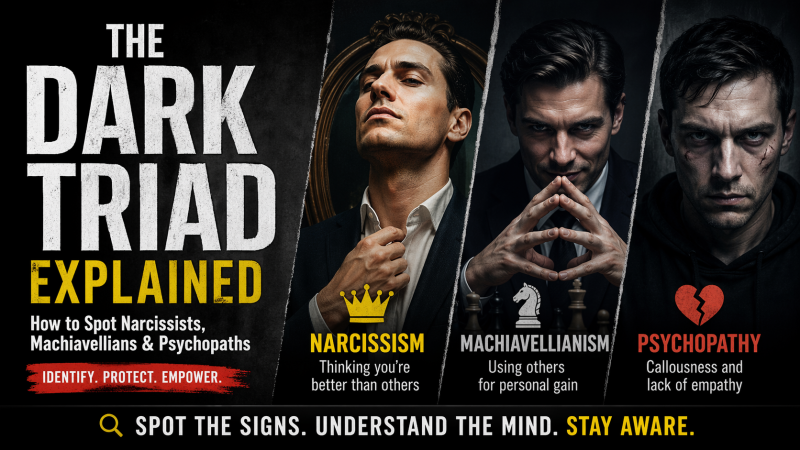
What Is the Dark Triad?
The Dark Triad is a set of three related personality traits: narcissism, Machiavellianism, and psychopathy. This concept was introduced by psychologists Delroy Paulhus and Kevin Williams in 2002. Each trait on its own is different, but they share a core of hostility and low agreeableness. In everyday terms, people high in these traits tend to be self-centered, manipulative, and lacking in empathy. It’s important to note that the Dark Triad itself is a non-clinical concept — it describes tendencies in normal individuals, not a formal diagnosis. (For example, only extreme narcissism would qualify as Narcissistic Personality Disorder under the DSM or ICD criteria.) In other words, many of us may occasionally exhibit some narcissistic or Machiavellian behaviours, but those traits only become a problem when they dominate a person’s character.
Narcissism – Definition & Traits. Narcissism involves an inflated sense of self-importance and a craving for admiration. Narcissists believe they are special or superior, even if their accomplishments don’t justify it. They often lack empathy and are quick to feel slighted or victimized. In practice, a narcissist might exaggerate achievements, monopolise conversations, or demand constant praise. According to Cleveland Clinic experts, people with narcissistic tendencies “see themselves as special” and expect others to treat them that way, reacting badly to any criticism. Beneath their confident exterior, many narcissists actually feel insecure and are sensitive to failure. (This aligns with research showing that narcissistic individuals may present as either grandiose or covert types.) When writing about narcissism, avoid language that diagnoses the reader or peers — instead use phrasing like “may exhibit narcissistic traits” and remind readers this is not a medical verdict.
Machiavellianism – Definition & Traits. Machiavellianism is characterised by cynical manipulation and a strategic, self-serving approach to relationships. A Machiavellian person knows the difference between right and wrong, but doesn’t care — they’ll lie or cheat if it means getting ahead. They tend to be emotionally detached (“cold”) and very pragmatic. Psychology literature describes Machiavellians as callous and unprincipled. They may feign friendliness or trustworthiness, but it’s a tactic to control others. We should emphasise that Machiavellianism is not a clinical disorder; it’s a personality trait. Phrases like “subclinical Machiavellianism” or “Machiavellian tendencies” help maintain compliance.
Psychopathy – Definition & Traits. Psychopathy involves impulsivity, thrill-seeking, and a profound lack of empathy or remorse. Psychopaths may be superficially charming, but they often take dangerous risks without regard for others. Unlike Machiavellians, who are calculating, psychopathic individuals can be impulsive and reckless. Research notes that psychopathy is the “most malevolent” Dark Triad trait. It closely relates to Antisocial Personality Disorder, but again, many people can have psychopathic traits (like low empathy) without a formal diagnosis. In writing, avoid calling someone a “psychopath” outright – instead describe behaviours (e.g. “lacks compassion, may appear fearless or thrill-seeking”).
Common Signs of Dark Triad Personalities. Each Dark Triad trait has unique signs, but they also share warning behaviours. People with these traits often appear confident and charming, which helps them mask their darker side. For example, they may take leadership roles (CEOs, politicians) and attract followers. However, their relationships tend to be shallow: they rarely form deep, caring bonds. Other red flags include:
- Excessive charm: They make strong first impressions and draw people in, but this can feel superficial or manipulative.
- Self-centeredness: They expect special treatment and admiration, and react badly to any perceived slight.
- Frequent lying or deceit: Dark Triad individuals tell you what you want to hear to gain trust, then contradict reality. They may isolate you or enlist you in dishonest schemes.
- Risk-taking: They engage in high-risk behaviours (financial gambles, dangerous hobbies, breaking rules) and may pressure others into risks as well.
- Lack of empathy or compassion: Unlike most people who instinctively help someone in need, they often ignore or even enjoy others’ suffering.
- Excessive jealousy or possessiveness: Despite seeming confident, they often crave control. They may treat people as status symbols and become envious when others gain advantage.
- Materialism or greed: Appearance and status matter to them. Stories from experts note they can even bleed family or friends financially to maintain their image.
- Bullying or abusive behaviour: There is a well-documented overlap between Dark Triad traits and bullying or abuse, especially in intimate or workplace settings.
These signs are drawn from clinical observations (e.g. Dr. Susan Albers of Cleveland Clinic) and behavioural studies. Rather than diagnosing, frame them as “tendencies” or “patterns”.
Why It Matters – Risks and Examples. Understanding the Dark Triad is not just academic. People with strong Dark Triad traits can harm others’ well-being, finances, or safety. For example, cyber dating abuse and relationship control have been linked to Dark Triad profiles. Workplace dynamics can suffer when a Machiavellian or psychopath is in charge — research suggests such leaders may exploit team members. In families, narcissistic traits can lead to emotional abuse of children. It’s important to stress that not all narcissists or Machiavellians are criminals or abusers, but higher levels of these traits raise the risk of unethical or harmful behaviours. Cite sources like Cleveland Clinic and Mayo Clinic to back up these claims (e.g. linking narcissism to troubled relationships).
Coping Strategies & When to Seek Help. The article should advise readers what to do if they suspect someone has Dark Triad traits. Suggestions include: setting firm boundaries, not engaging in power struggles, seeking support from friends or counsellors, and prioritising self-care. Importantly, we must add disclaimers: “This information is for educational purposes and is not a substitute for professional mental health advice.” Encourage readers to seek help if they feel unsafe (e.g. “If you are in an abusive relationship, contact a mental health professional or support group”).