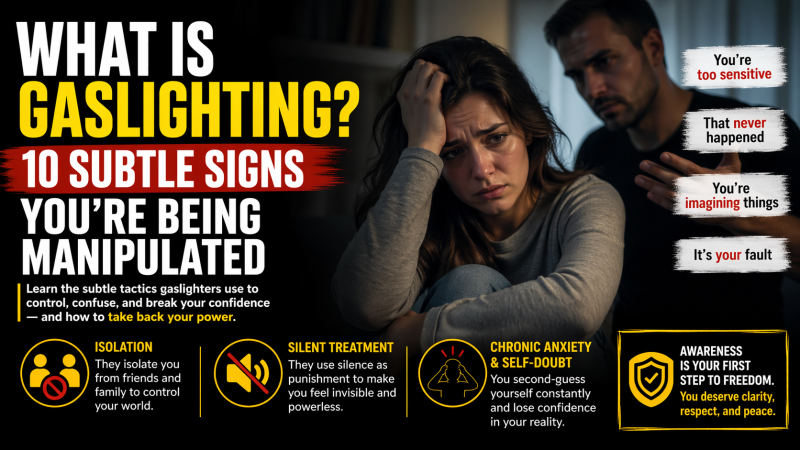
Understanding Gaslighting
Gaslighting is an insidious form of psychological manipulation and control. It involves repeatedly lying, denying, and distorting facts to make someone question their own reality and sanity. As one medical source explains, gaslighting “consciously distorts a person’s sense of reality” so victims “begin to question the false reality constructed by the manipulator”. Merriam-Webster defines it as “psychological manipulation of a person … over an extended period of time that causes the victim to question the validity of their own thoughts, perception of reality, or memories,” leading to confusion, loss of confidence, and dependency on the abuser. Psychology experts agree: gaslighting is not simply having a difference of opinion, but a pattern of intentional abuse aimed at gaining power and control.
Gaslighting can occur in any close relationship – romantic, family, workplace or friendship – often where one person has more power. The abuser may draw on social-cognitive levers like emotional dependence and trust, then twist them to their advantage. For example, the abuser might love-bomb you at first (praise and charm) but gradually introduce doubts and conflict. Over time, even well-meaning disagreements are met with manipulation (e.g. “You’re crazy for thinking that!”), slowly trapping the victim in a web of uncertainty.
Gaslighting’s purpose is to undermine your sense of self. The goal is often to make you dependent and easier to control. Victims may find themselves apologizing constantly, feeling like they “can’t do anything right,” or fearing they’ve done something wrong even when they haven’t. Notably, gaslighting also involves punishment tactics like the silent treatment or emotional withdrawal – cutting off communication or affection to punish you and heighten confusion.
Key Definition: Gaslighting is a form of emotional abuse in which someone subtly and repeatedly lies, denies or distorts reality to make you doubt yourself. It often progresses slowly, eroding your confidence and creating chronic anxiety or depression.
10 Subtle Signs You’re Being Manipulated
Gaslighters use many tactics in a persistent pattern. No single act defines gaslighting; it is the repetition and variety of these behaviors that gradually wears you down. Here are ten subtle signs to watch for (each discussed with examples):
-
1. Constant Lying and Denial. The abuser frequently denies what they said or did, even when you have proof. For example, they may say “I never said that” or “That never happened” when confronted. This blatant lying, especially in the face of evidence, teaches you not to trust your senses and begin to doubt your memory. Victims report thinking, “Did that really happen?” after every conversation. When you notice this pattern – especially if it happens repeatedly – it’s a red flag.
-
2. Projection and Blame-Shifting. They accuse you of exactly the things they are doing. For example, if you call them out on lying, they turn it around and say, “You’re lying, not me.” Or they may insist you are too sensitive or overreacting (e.g. “You’re just being dramatic”). This is a classic tactic: by projecting their faults onto you, they force you onto the defensive and deflect responsibility. You may often end up apologizing or defending yourself for things you didn’t do, feeling constantly guilty and confused.
-
3. Trivializing or Dismissing Your Feelings. The gaslighter will regularly say things like “Calm down, it’s not a big deal,” or “You’re too sensitive.” Such comments make you feel invalidated. Over time you may begin to wonder if your feelings are wrong or unreasonable. In reality, this diminishes your self-esteem and makes you doubt whether you even have the right to feel upset, pushing you toward dependence on the abuser’s version of events.
-
4. Refusing to Listen / Silent Treatment. When you confront them, they shut down. They may stonewall you (refuse to talk), give you the cold shoulder, or pretend not to understand what you’re saying. For instance, after you raise a concern, they might turn away or say “That makes no sense” and change the subject. This silent treatment is a form of punishment: it leaves you anxious, guilty, and desperate for their attention. You start to monitor your own behavior constantly, afraid of triggering another silence episode.
-
5. Always Being Right. In any dispute, the gaslighter insists their perspective is the only “truth.” They rarely admit fault or apologize. Even if you clearly saw something happen, they might say “You’re wrong” or “That didn’t happen that way.” In a healthy relationship, two people can agree to disagree; gaslighters won’t. This insistence on being right is a control mechanism – it makes you question your own judgment and feel insecure in any discussion.
-
6. Undermining Your Confidence and Achievements. They belittle your successes and focus on your flaws. Comments like “Anyone could have done that” or “You’re imagining things” are common. Over time you may start to agree with them, losing pride in your accomplishments. This constant criticism is a trap: as your self-esteem erodes, you become more reliant on the gaslighter’s approval and validation.
-
7. Praise Then Punishment (Intermittent Rewards). To keep you off balance, gaslighters will occasionally praise you or say something nice – but just enough to confuse you. For instance, they might compliment you for one thing (“You’re good at your job”) right after harshly criticizing another. This mixed messaging creates cognitive dissonance: “Wait, am I doing something right or not?” It makes you doubt your gut instincts and strive for approval, which gives them more control.
-
8. Isolating You from Others. A critical red flag is when they discourage or block your contact with friends and family. Initially they may want to spend all their time with you (love-bombing), but soon they start saying things like, “Your friends don’t really care about you,” or “Your family is just trying to cause problems.” Gradually, you find yourself cut off from support. This social isolation makes you more dependent on the gaslighter and amplifies doubt – you have fewer reality checks from others who know you well. Women’s Aid (UK) cites isolation as a key tactic in coercive control, noting abusers will make you “dependent by isolating [you] from support”.
-
9. Questioning Your Sanity. This is the hallmark of gaslighting: you start to feel crazy even if you know what you saw or said. They may flatly tell you that your recollection of events is wrong or “never happened,” denying facts you remember. As a result, you might constantly second-guess your own memory and perceptions, living in a state of chronic confusion. You may feel anxious or hesitant to make even simple decisions, because you fear they’ll declare you overreacting or mistaken. Over time, this can lead to generalized anxiety and depression – studies show gaslighting erodes self-esteem and causes anxiety/disorders.
-
10. Your Emotional State: Anxiety and Self-Doubt. Finally, notice how you feel around them. Gaslighting often leaves victims feeling on edge, anxious, or like they “can’t do anything right”. You might find yourself apologizing for things you haven’t done wrong, feeling unworthy of attention, or suddenly losing interest in activities you used to enjoy because you feel incompetent. If you realize you constantly question your own sanity or judgement and feel never-good-enough, these emotional signs are themselves an important clue that you’re being manipulated. (Professionals warn that this chronic anxiety is not your fault, but a normal reaction to sustained emotional abuse.)
Table: Signs of Gaslighting, Behaviors and Actions
| Sign | Typical Behaviors | What You Can Do |
|---|---|---|
| Lying/Denial | Repeated denial of facts, “I never said that,” even when caught. | Keep records of events (text, notes); trust your memory. Confront calmly or seek third-party perspective. |
| Projection/Blame-Shifting | Accusing you of things they do (“You’re lying, not me”), turning tables. | Stay calm, note the contradiction. Remind yourself it’s their tactic. Discuss with trusted friend to get reality check. |
| Minimizing/Dismissiveness | Saying “You’re too sensitive,” “Relax, it’s nothing,” trivializing your feelings. | Affirm your feelings are valid. Write in a journal to validate experiences. Seek emotional support from friends or counselor. |
| Shifted Guilt and Shaming | “You made me do this,” constant guilt-tripping. | Refuse to accept undue blame. Use “I” statements (“I feel blamed”). Set boundary: you’re not responsible for their actions. |
| Undermining Achievements | Belittling compliments (“Anyone could do that”), critiquing successes. | Remind yourself of your accomplishments. Celebrate successes privately or with supportive friends to counteract criticism. |
| Praise-Punishment Cycle | Intermittent compliments followed by criticism; confusing behavior. | Keep track of patterns. Remember compliments do not erase abuse. Maintain self-worth outside their approval. |
| Isolation | Discouraging contact with friends/family, “They’re bad for you.” | Maintain ties: schedule regular check-ins with trusted friends/family. Join support groups or online communities. |
| Silent Treatment/Stonewalling | Refusing to talk when upset, giving the cold shoulder as “punishment.” | Stay calm. Use absence as a signal to self-reflect instead of panic. If possible, say “I’ll revisit this when we can talk calmly.” |
| Gaslighting Reality (Memory) | Insisting your memories are wrong, “That didn’t happen,” calling you “crazy.” | Write down conversations/events (journal). Share recollections with others for confirmation. Remember the abuser’s only telling their version. |
| Chronic Anxiety & Self-Doubt | You feel constantly anxious, second-guessing yourself, apologizing too much. | Notice these feelings as signs of abuse, not personal flaw. Practice self-care, mindfulness or therapy to rebuild confidence. |
Coping and Safety Guidance
If you recognize these signs, it’s important to protect your mental health. Evidence-based recommendations from therapists include:
- Trust your instincts and document things. Keep a written journal or notes of conversations and incidents. As one expert suggests, writing down “I said/he said” in black-and-white can help you see distortions clearly. This also serves as evidence if you later need outside help.
- Talk to someone you trust. Gaslighters often try to isolate victims, so counteract that by staying connected. Tell a close friend or family member about what’s happening. Their outside perspective can confirm reality (e.g. “I remember it differently too”). Support groups or therapists can also be invaluable.
- Set clear boundaries. Decide in advance what behavior you will and won’t accept. Communicate these boundaries calmly (“It’s not OK to talk to me that way”) and stick to them. Boundaries protect your emotional space and make it harder for the abuser to manipulate you.
- Take care of yourself. Gaslighting is stressful; make time for activities that relieve anxiety (exercise, hobbies, mindfulness). Building your own self-compassion and self-esteem is protective.
- Seek professional help when needed. A psychologist or counsellor can help you rebuild confidence and perspective. Therapy approaches like cognitive behavioural therapy (CBT) or reality therapy are proven to help victims of gaslighting regain trust in themselves. If the situation involves threats or physical abuse, contact domestic violence support services immediately. (In the UK, for example, Women’s Aid and domestic abuse helplines are available 24/7.)
It’s never your fault if you’re being gaslit. The manipulation is a result of the other person’s abuse, not any failing on your part. Recognizing what’s happening is the first step to reclaiming your sense of reality and well-being.